Archive
Management Gurus
Every student of management methods has heard of the blah, blah mainstream gurus like Prahalad, Charan, Christensen, Covey, Collins et al. How many of you have heard of Argyris, Mintzberg, Ackoff, Warfield, Ackoff, Beer, Livingston? You never hear of these dudes because they’re out on the lunatic fringe. They’re heretical, in-your-face realists who tell it like it is; which rubs CEOs and self-important top management teams the wrong way, of course. Thus, their work is ignored.

Open Kimono
I continue to be enamored and awed by the way the leadership at zappos.com operates the company. I’m convinced that they’re the real deal. They’ve obtained a level of business nirvana that balances altruism with profitability which is perhaps unmatched by any other company on earth – except for maybe Semco.
Sadly, even though Zappos continuously and willingly opens its kimono to all those who care to learn about how they nurture and sustain their success, the Zappos operational model probably won’t go very far. The endless sea of power-obsessed dinosaurs that rule the corpo roost are too clever (cleverness is how they got into the protected nest in the first place).
The most common refrain for rejecting any attempt to emulate Zappos “best practices” will be: “none of that stuff will work here because our business is totally different“. These will be the words of wisdom uttered from the same moo-herd potty mouths that repetitively proclaim “customers are number one and our employees are our most valuable asset“. Blah, blah, blah. Yawn, yawn, yawn. BS, BS, BS.
Cog Diss
If interested, check out Mary Jo Foley‘s hindsight blog post regarding Microsoft CEO Steve Ballmer‘s screw-up on the Vista fiasco: Feedback Failure. Mary laments:
“As a result, I’m left wondering about Vista, as many are/were about the current financial crisis: Why didn’t anyone inform us sooner of the impending meltdown? Weren’t there warning signs? Where was everybody?”
Surely Mary, you’re joking, right? You’re wondering where everybody was and why nobody informed us? In short, at least some Microsoft DICS who weren’t deeply and personally invested in the Vista project either:
- knew about the impending doom but were afraid to speak up,
- did have the courage to speak up but were “ignored” or slapped down,
- “disconnected and distanced” themselves from the project because they didn’t give a chit about it (apathy)
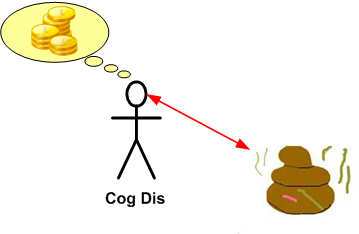
Those who were fully ensconced in the quagmire were blinded by the light. They suffered from the common and pervasive human malady called “cognitive dissonance“. Cog Diss is where you convince yourself that you’re looking at a pile of gold when in reality you’re staring at a pile of poop. However, deep down, you sense the mismatch and experience uneasy feelings as a result.
All the dysfunctional behaviors described above are caused by living life too long within the confines of an unchanging and soul-busting CCH bureaucracy.
Stunning, But Not Surprising
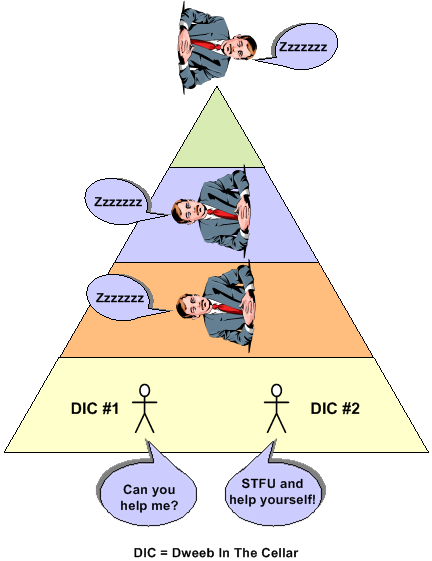
Suppose you had an innately complex product to sell. Now suppose that a potential customer comes up to you and asks for a user’s starter guide to help him/her understand your product for the purpose of making a buy decision. Would you tell that customer “We’re short-handed and have schedules to meet, so write It yourself!“? WTF!
For people who work in CCH bureaucracies but don’t know it (or who do know it, but conveniently ignore it and don’t do squat to dissolve it), this behavior between internal groups is ubiquitous, systemic, and so pervasive that it’s taken for granted. It’s stunning, but not surprising.
Incremental Watts
I don’t know which name I like better, Watts Wacker or Soupy Sales, but this post is about Watts. Watts Wacker is a CEO and futurist who uttered one of my favorite quotes:
You can’t increment your way into the future – Watts Wacker
I think this quote is directed toward leaders of cushy, static, and stanky CCH companies who are so afraid of the future that they move by inches at a time in passive response to external changes. The only way to leapfrog your competitors, since they’re just as afraid as you and are inching along like molassess running up hill, is to make a disruptive leap into the future.
It takes revolutionaries to trigger disruptive leaps into the unknown. Someone (actually, two people) with an innocent but assuredly incremental mindset recently said to me: “Revolutionaries are usually lined up in front of a wall and shot“. My response was “that’s why there are so few of them“. Bummer.

“Overburdened”
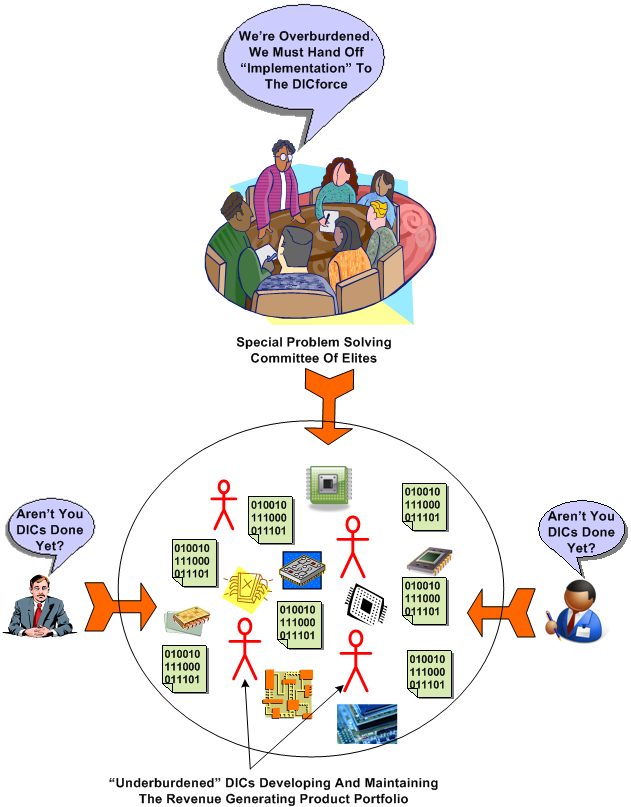
Are any words needed to elaborate on the blasphemous message that I’m trying to convey in the dorky graphic below? If so, gimme a shout out.
Committee Performance Metrics
A favorite and frequent activity undertaken by corpocrats everywhere is the formation of committees and special task forces to “aggressively” tackle and solve pressing org problems that are negatively affecting the performance of the corpocracy’s DICforce. The typical cycle of events is as follows:
- 1) The committee of elites is formed to “help” the DICforce do their jobs better.
- 2) After: a) several months of meetings with half-assed attendance, b) infinite BS sessions where nothin’ of substance is produced or propagated downward, c) there’s no detectable performance improvement from those dwelling in the cellar, and d) gobs of money have been consumed, the committee sponsor (a.k.a. the money supplier) asks for measures of performance to judge whether his/her investment is paying off.
- 3) The committee conjures up some BS “camouflage” metrics that feign problem solving prowess and progress (see the figure below for examples).
- 4) The sponsor buys into the BS set of metrics and the resource drain continues.
- 5) Go to step 2).
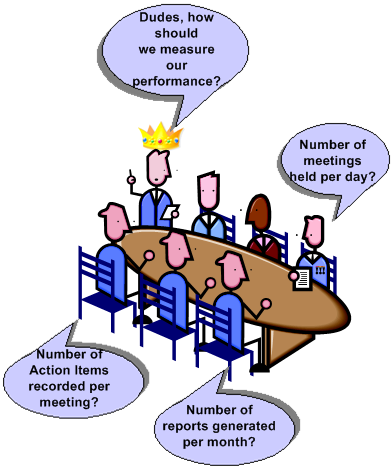
You’d think that a meaningful metric could be obtained by periodically polling the people that the elite committee is supposed to be helping – the DICforce. Do you think many committees, councils, task forces, centers of excellence, yada-yada-yada, do this? If not, why do you think that is the case?
Almost Anything Can Work, BUT….
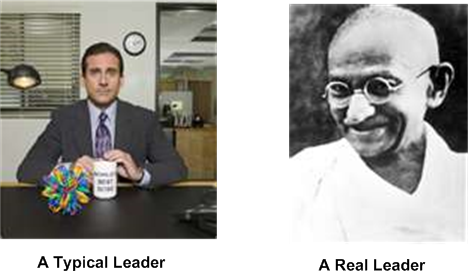
Almost any well known management technique/process for improving corpo performance (e.g. six-sigma, BPR, MBO, task forces, brainstorming, core competencies, SWOT analysis, etc) that was mildly successful in a handful of cases can work. BUT, it takes real leadership to make them work; and that’s why they don’t work.
So WTF is real leadership? I make stuff up and I’m not fit to lead anyone or anything, so don’t ask me :^)
Watercooler Whining
Regardless of whether they work for a world class org or a brutal and oppressive CCH bureaucracy, I assert that most DICs “discuss” among themselves what they think is wrong with their org at all layers in the caste system. The difference is that in CCH abominations, the discussions are confined to the local environment and well out of earshot of the BMs in charge (In CCHs, BMs, as opposed to PHORS, are always in charge). As soon as the whiff of cologne and bright beams of light emitted by an approaching self-important BM is detected by the “whining” DICs, all dialog stops and the malcontents disperse as if someone let loose an SBD stanker.
 It doesn’t take Sherlock’s genius to realize that most of the water-cooler discussions ‘tween DICs are self-serving and myopic BS stories about how they are “victims” and how they have been “wronged” by other fellow DICs and disconnected BMs. However, some, just maybe some complaints are about legit, systemically baked-in problems that, if competently addressed, would improve corpo performance. In most cases, the DICs don’t know how to solve the org issue or they don’t have the authority and clout to try out their solutions.
“The day soldiers stop bringing you their problems is the day you have stopped leading them. They have either lost confidence that you can help or concluded that you don’t care. Either case is a failure of leadership.” – Karl Popper
I’d like to mangle Popper’s brilliant quote with:
“If you haven’t setup and maintained your corpo culture so that your soldiers feel comfortable bringing their problems to you, or you have done so but have continuously ignored their concerns by doin’ nuthin’ of substance to help them, they have either lost confidence that you can help or concluded that you don’t care. Either case is a failure of leadership.” – bulldozer00.
Of course, I just make stuff up and I’m not fit to lead anybody, so don’t pay attention to anything I say.
(Dys)functional Managers
IMHO, “functional” engineering managers (e.g. software, hardware, systems, test, etc) should be charged with: developing their people, removing obstacles to their progress, ensuring that tools and training are available, and streamlining bloated processes so that their people can work more efficiently and produce higher quality work outputs. Abdicating these responsibilities makes these dudes (dys)functional bozo managers in my (and maybe only my) eyes.
It really blows my mind when (dys)functional managers are allowed to anoint themselves “chief architect” over and above individual product team functional leads. It’s doubly annoying and counterproductive to an org when these BMs don’t work hands-on with any of the org’s products day-to-day, and they haven’t done any technical design work in this millenium. If I was their next level manager (and not a BM myself so that I could actually see the problem), I’d, as textbook clone managers love to say, “aggressively address” the BM problem by making it crystal clear what their real job is. I’d follow up by periodically polling the BM’s people directly to evaluate how well the BM is performing. Of course, I’m not fit to lead anyone, so you should totally ignore what I say :^)


Why am I here?
WTF?
Meh!
D'oh!

My BTC Address



 Bulldozer00's Blog