Turkey Dog
Oh boy oh boy! Turkey, mashed potatoes, sweet potatoes, and stuffing for me!

Burp!!!

ZZZZZZZ!

Time To Crack Some Heads!
Whenever tragedy strikes, politicians tend to make a rush to judgment and propose or execute dumbass moves that make it appear like they’re doing something useful. Ebola scare? Ban travel to all! Immigration problem? Build a 1000 mile wall! Terrorist attack? Damn it, close the borders to all!
As long as politicians maintain their cozy relationship with the bankstas who finance their irresponsible deficit spending in return for bailouts waiting in the background, they’ll be on a constant vigil for excuses to inhibit the growth of Bitcoin. On the heels of the Paris attacks, the latest call for action is to “crackdown” on Bitcoin as a means for terrorist financing.
First of all, no one, no matter how powerful and well funded, can “crackdown” on Bitcoin – because there is no head to chop off. All that those who have much to lose when Bitcoin eats their lunch can do is pass laws that attempt to make it annoyingly difficult for fiat currency to get into and out of the bitcoin economy.
Second, and most important of all, is that Bitcoin is not even a major source of terrorist financing. As the following report, published just last month by the UK treasury for its politicians shows, the terrorist’s predominant financier is, as you might have guessed, your friendly banksta. You know, the one that charges a fee every time you sneeze and “invests” your hard earned cash in risky schemes at no risk to themselves.


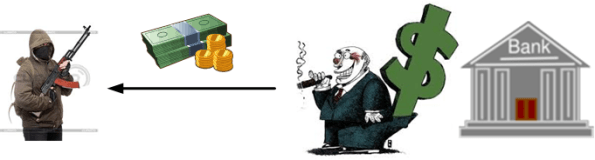
Ain’t Gonna Do It – Ever
Straight from the Bitcoin Core source code, which is written in C++ (of course!) and is observable for all the world to see (including federal reserve bankstas and other corrupt government fiat currency debasers), we have….
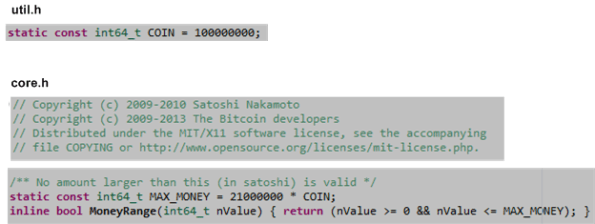
That’s it: no more than 21.0E14 “satoshis” will ever be minted in the Bitcoin world.
Well, you might smugly say, anybody could change the source code to jack up the “MAX_MONEY” and/or “COIN” compile-time constants and release the next update. Uh, yeah, but unless the thousands of BTC miners with peta-flops of hashing power invested in the bitcoin economy voluntarily choose to run the new “inflationary” code, tain’t gonna happen. And, since it would clearly be against their best interests to do so (because it is their money they’re dealing with and not “other people’s money” that they can leach off of) they ain’t gonna do it – ever.
Out Of Thin Air
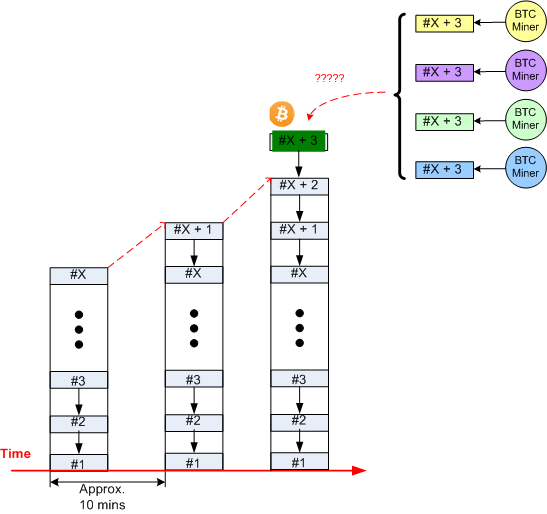
As the figure below attempts to illustrate, a new block of validated financial transactions is added to the Bitcoin blockchain approximately every 10 minutes.

As of today, whenever a block is added to the blockchain, 25 newly minted Bitcoins spring into existence out of thin air. This number of bitcoins-per-block will be cut in half every four years until a total of 21 million BTC have been birthed into existence. The next halving, which will result in 12.5 bitcoins being created per block, will happen in 2016. The last bitcoin will magically appear in the world sometime in the year 2140.
So, who adds the blocks to the chain, and who gets the bitcoins? The answer to both questions is “the miners do“. Bitcoins are a miner’s reward for the energy it expends in solving a computationally intense computing problem whose difficulty may vary from block to block. If blocks get added too quickly, the difficulty of solving the puzzle goes up. If blocks get added too slowly, the difficulty goes down.

A bitcoin miner’s job is to validate the transactions in each block and to preserve the integrity of the blockchain. The bitcoin network is comprised of thousands of these miners working together in accordance with a set of programmed-in protocol rules that ensure they do indeed work together in a consensus-based manner to secure the blockchain from external and internal hack-attacks. As the blockchain grows and more mining power is added to the network, the system becomes more trustworthy and hardened against thievery – including against rogue miner insiders.
After a block is successfully added to the chain, all the miners go to work racing against each other to solve the next cryptographic math problem for the privilege of adding the next block and earning the bitcoin reward. The winner takes all – for that block only. And then the cycle starts over again. Wash, rinse, repeat.
Booms, Busts, Stability, Antifragility
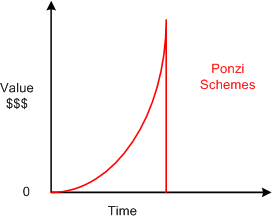
The figure below shows the one time boom-bust pattern of a Ponzi scheme (Bernie Madoff anyone?) We have a meteoric rise in value based on smoke and mirrors where a few get rich, and then an instantaneous dive during which many poor souls lose their shirts. Note that when the bubble pops, the party is over, finished, kaput.
The next figure shows the slow and steady rise in value of a viable, value-creating, system. Since the value the system creates is real, the system achieves stability and remains operational for an enduringly long time. It becomes woven into the fabric of society. At some point, the populace starts taking the system for granted and assumes the system has been influencing their behavior forever.
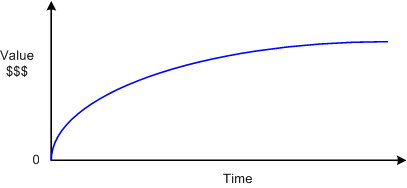
Here is my sketchy interpretation of what’s happening in the Bitcoin space:
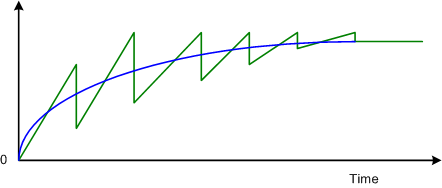
Bitcoin has already experienced several heart-stopping boom-bust cycles throughout its steady march toward stability and widespread acceptance. But note that unlike a Ponzi scheme, which many dooms-mongers (like textbook economists and obsolete, fat-cat, bankstas) loudly claim Bitcoin is after every bust, Bitcoin has not gone kaput. It’s robust, resilient, and dare I say, anti-fragile. The system adapts and get stronger after withstanding every technical and political attack – improving itself via the community driven BIPs process.
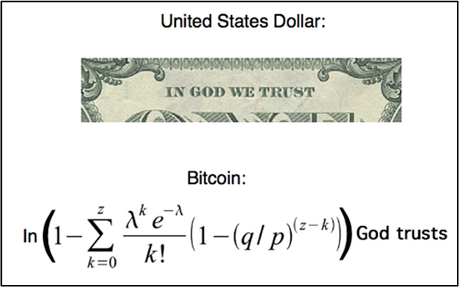 Photo credit imgur.com gallery.
Dinospeak
“I think there is a world market for maybe five computers.” – Thomas Watson, president of IBM, 1943
“Television won’t be able to hold on to any market it captures after the first six months. People will soon get tired of staring at a plywood box every night.” – Darryl Zanuck, executive at 20th Century Fox, 1946
“There is no reason anyone would want a computer in their home.” – Ken Olsen, founder of Digital Equipment Corporation, 1977
“Almost all of the many predictions now being made about 1996 hinge on the Internet’s continuing exponential growth. But I predict the Internet will soon go spectacularly supernova and in 1996 catastrophically collapse.” – Robert Metcalfe, founder of 3Com, 1995
Christine Lagarde, chief of the International Monetary Fund (IMF), recently said that banks have nothing to fear from Bitcoin. Jamie Dimon, CEO of JPMorgan bank and one of the recipients of the biggest taxpayer bailout of all time, said Bitcoin will not survive. Peter Ohser, the executive vice president of business development at global remittance giant MoneyGram, said: “We don’t see bitcoin in particular as a solution today to be able to disrupt us or provide a better or different service.”
The clueless heads of the institutional dinosaurs of today have spoken. Nuff said.

The Chasm Of Doom
In 1991, Geoffrey Moore wrote the following paragraph in his classic book, “Crossing The Chasm“.
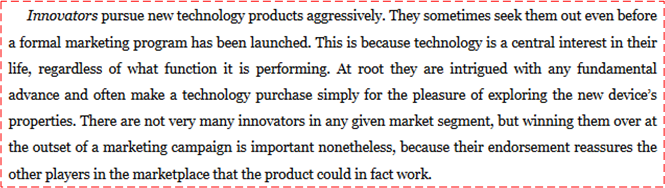
Mr. Moore also introduced the Technology Adoption Lifecycle (TAL) curve in the book as follows:

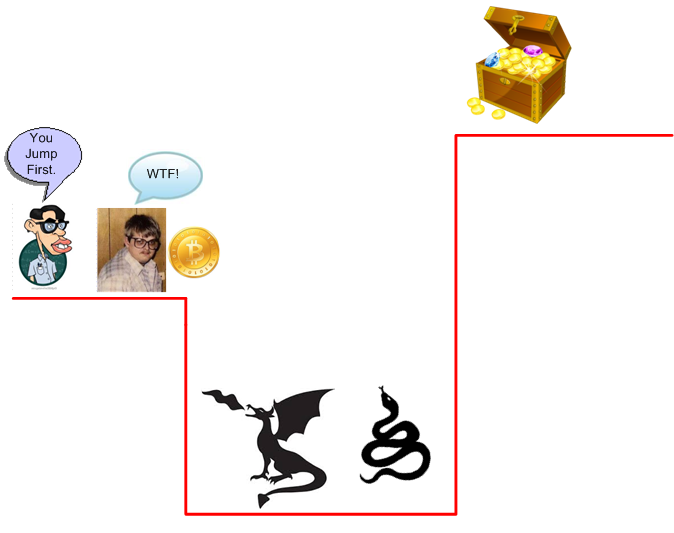
The “chasm” in the curve is the critical do or die period in the life of a disruptive technology. If its advocates can’t manage to catapult the technology over this imposing chasm of doom, the technology either outright dies on the vine or it lives on in an impoverished, niche market.
My interpretation of Mr. Moore’s quote places me squarely into the “Early Adopter” segment of Bitcoin technology. Sure, it’s been 6 years since Satoshi Nakamoto bootstrapped the Bitcoin network into existence, but Bitcoin’s goal of obliterating the deeply entrenched, inequitable banking system and changing world behavior is anything but assured. The question is: “Has Bitcoin already crossed the chasm? I think so, but do you?
Volatility Is Good
Before I read this insightful bitcoin.com forum post by Wences Casares, I thought that Bitcoin’s extreme price volatility was an inhibitor to mainstream adoption.
Of all the ways in which Bitcoin could fail the one that worries me most, because I think it has the highest probability of all the bad things that could happen, is a price panic that drives the price to zero, or $15, from which it may be very hard for Bitcoin to recover the public’s trust.
Right now most of the money that is invested in Bitcoin is money people can afford to loose and that makes it safe money. So when Bitcoin goes from $1,200 to $200 there is not a vicious cycle of people who need to sell, because they cannot afford to loose more money, that drives the price to zero.
It is hard to estimate how many people own bitcoins, but it may be somewhere between 13 and 15 million people right now. If Bitcoin is successful we will see hundreds of millions of people own Bitcoin and, eventually, billions. The only way we can get to billions of people owning Bitcoin is by the price going up by several orders of magnitude, let’s say $ 1 million (but this is highly speculative and risky). So, if I am right, and Bitcoin has to go from $390 to $1,000,000 the best way for it to get there without crashing irreversibly is with as much volatility as possible. If bitcoin went up a couple percentage points every week and everybody began to think about it as a “sure” thing, investing money that was destined to pay for kids colleges or for retirement, that is a disaster waiting to happen price wise. Because when Bitcoin corrects those people have to sell because they cannot take more losses, potentially creating a vicious circle which is hard to reverse.
Ironically, we have to thank Bitcoin’s volatility for people not investing money they cannot afford to loose. As long as the Bitcoin price remains highly volatile and perceived as risky, we are OK. Begin to worry when it is perceived as a sure thing that everybody should own a lot of. – Wences Casares
Wences is a staunch Bitcoin advocate and the star character in the book “Digital Gold“. When he speaks, I listen closely.
If you want to help make the world a better place for literally billions of “unbanked” people and you have some money you can afford to lose, then screw blowing that money on casinos and/or lottery tickets. Follow these instructions:
- Download a desktop computer wallet program (I use the Electrum wallet) and create an encrypted wallet.
- Open an account on a bitcoin exchange (I use Coinbase.com)
- Exchange your “lose-able” fiat currency for bitcoins.
- When your bitcoins get deposited in your exchange’s online “custodial” wallet, transfer it off of the web and into your desktop wallet.
- If you’re really paranoid about having your Bitcoins stolen, grok how to move your keys out of your desktop wallet and into a hardware wallet or paper wallet – and then do so.
If you don’t physically possess your private bitcoin keys, you really don’t own any bitcoins. You have to trust whoever has possession of those keys to keep them safe – like you have to trust a bank to keep your fiat money safe. And as we all know too well from the 2008 debacle, third party keepers of “other people’s money” like banks are not to be trusted if there is a viable alternative. Bitcoin is one such alternative, but you have to spend the time to educate yourself and take personal responsibility for your financial well being.

BTC For Joop
With over $100 USD worth of BTC in my mobile Airbitz wallet, I was jonesing to experience my first exchange of BTC for material goods. So I moseyed on over to overstock.com and started browsing around. I settled on purchasing my fave cologne, Joop! Homme.

I placed the item in my shopping cart and continued on to the checkout counter. As expected, the option to use BTC as payment for my French shower soap appeared right alongside the other “normal” methods of payment.

After selecting bitcoin as my payment choice, I continued on to the next page where the only info I had to provide was my name, phone number, and shipping address. So I entered the info, clicked “continue“, and was presented with this payment page:
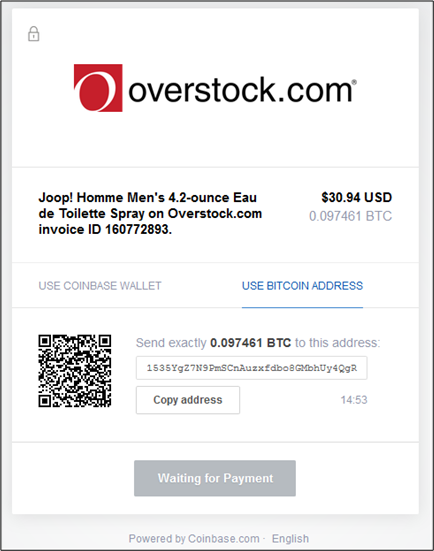
Note that overstock.com was requesting 97.461 BTC millibits from me. Also note that the bottom of the dialog box conveys the fact that overstock.com employs the service of coinbase.com to exchange BTC for USD – which is waaaay less costly for their business to use than using the Visa/Mastercard, or Paypal platforms.
Next, I opened the Airbitz wallet and pointed my phone’s camera at the QR code on the screen. The app focused in on, snapped a picture of, and decoded the graphic QR request for payment. I then entered my wallet’s pin and the transaction was executed.

As you can see, 97.368 millibits were deducted from my wallet and sent to overstock’s coinbase account. I don’t understand why the amount deducted from my wallet was 93 microbits (approx .03 USD) less than the amount requested by overstock, but I suspect it had to do with the USD/BTC exchange rate?
After acknowledging the payment, overstock.com completed the checkout process by presenting me with the following screen:

So that was it; a fast, painless, and secure transaction. Since I didn’t have to disclose any credit card info to overstock.com, I don’t have to worry about them getting hacked in the future (ala Target, Home Depot, etc) and getting my credit card info stolen from their servers. It’s a win for overstock.com (lower transaction cost), a win for the government (sales tax collected), and a win for me (no credit card theft worries).
The future is already here — it’s just not very evenly distributed – William Gibson
The Internet Of Money
The figure below contrasts the protocol that powers the web, http, with the protocol that powers the internet of money, bitcoin. Unlike http, bitcoin is both a protocol and a form of money transported via that protocol. Bitcoin-the-currency and bitcoin-the-protocol are inseparable – they’ve been purposely fused together into a brilliantly elegant and groundbreaking monetary system.

Note that http is a centralized, client-server protocol built on top of a decentralized protocol. On the other hand, bitcoin is a decentralized, peer-peer protocol built on top of the same decentralized protocol as http. Http transports abstract information. Bitcoin transports less abstract (but still abstract) virtual currency.
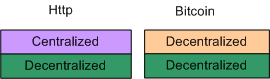
With the centralized http protocol, clients are at the mercy of those who own and control the servers that those clients issue “requests” to – those servers can be malicious. In addition, http server owners can go bankrupt or have their servers shutdown on the whim of “authorities who know what’s best for all” – taking whatever information or assets you thought you owned residing on those servers away from you.
Since bitcoin-the-protocol is decentralized, it can’t be “turned off“; just like the internet can’t be turned off. However, the possession and use of bitcoin-the-currency can be outlawed by governments if they decide that it’s a threat to them (behind the guise of “we know what’s best for all“). In addition, centralized client/server systems built on top of bitcoin-the-protocol, like currency exchanges and/or commerce sites that accept bitcoin, can be shuttered. But, with bitcoin-the-protocol, the cat is out of the bag. No matter how many “Silk Road” web sites get shutdown or how many “Mt. Gox” BTC exchanges go bust, you and I, as peers, will always be able to transact in bitcoin-the-currency over bitcoin-the-protocol.


Why am I here?
WTF?
Meh!
D'oh!

My BTC Address



 Bulldozer00's Blog