Archive
The New G-Spot
Before reading any further, please contemplate this Box cutter:
Essentially, all models are wrong, but some are useful- George Box
Now, let’s start with a pair of “model” problem-system and control-system templates:
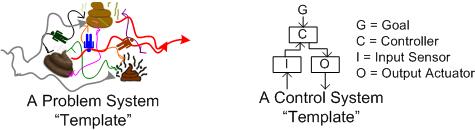
Next, let’s hypothesize a new composite system that you designed, built, and deployed to “solve a vexing socio-technical problem“. You diligently employed the dorky BD00 templates, your brain, and your positional power to form a “semi–effective” marriage between your specific problem (indicated by the blue, scoped boundary) and your specific controller (indicated by non-white components):
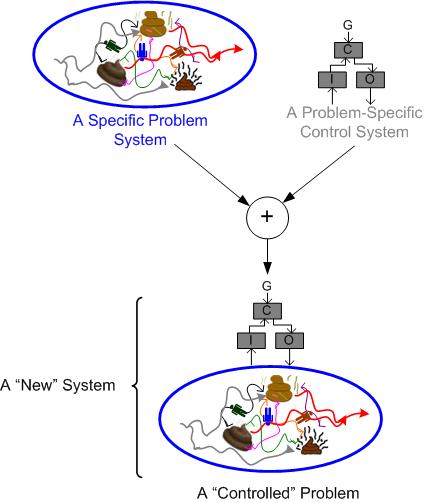
Although your new system may appear to be alleviating (or least containing) the problem, looks can be (and usually are) deceiving. Before you pat yourself on the back for being a “problem solver“, please contemplate these Gall-isms:
New systems generate new problems – John Gall
Systems Develop Goals Of Their Own The Instant They Come Into Being – John Gall
Intra-system Goals Come First – John Gall
Thus, according to the Gallster, the a-priori and noble “G” you designed into your fabulous controller subsystem will eventually be usurped (sooner rather than later) by the emergent “G” of the new composite system entity. Sometimes the new “G” totally obscures the original “G” so thoroughly that, given enough time, nobody can even remember what the original “G” was. D’oh!
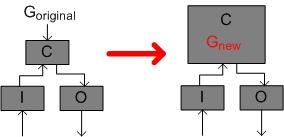
And what might this new system “G-Spot” be? Could it be to perpetuate and maybe even exacerbate the original problem so that the new system (especially the controller subsystem) can grow and thrive? After all, if the problem gets solved, then there will be no more need for the controller subsystem. In effect, the new system would be devouring itself as it solved the problem. But wait! That can’t happen because it would be a fruitless attempt to violate this Gall-Shirky pair:
Systems Tend To Grow, And As They Grow, They Encroach – John Gall
Institutions Tend To Preserve The Problem To Which They Are The Solution – Clay Shirky
An alternative BD00 quote rip-off is:
Systems, like people, tend not to consume themselves as food.
Can you concoct another alternative rip-off quote?
124 To 858
When a friend recently pointed me toward hupso.com, here’s what I discovered:

As you can see, the Hupso.com and the WordPress.com stats aren’t even in the same ballpark. Since I believe my wordpress stats are more accurate, the bulldozer.com “franchise” is potentially worth $431 per year; or $36 per month (LOL!).
Oh well, I guess I can’t quit my day job. But that’s OK. Despite the anti-corpo rants I hoist on this blawg, I like my day job and I like the people I work with and I like the people I work for.
In any situation one finds themself in, it could always be better or it could always be worse. But when one only thinks in terms of “it could always be better and can never be worse“, then there’s likely to be trouble on the horizon.
Stacked Ranking
The title of this post sounds like the stodgy name of some inhumane, BS, corpo process under which “supervisors” evaluate their children, I mean, induhvidual contributors. But wait! It’s the Valve way.
You don’t know who Valve is? Valve is a company that creates massive, multi-player, online games. According to “economist-in-residence“, Yanis Varoufakis, Valve rakes in $1B in revenue even though they have a measly 300 employees. Also, according to Yanis (and their employee handbook), they are totally flat chested. There’s not a single boob, oops, I mean “boss“, in the entire community. D’oh!
The employee handbook spells out the details of the “Stacked Ranking” process, but in summary, peers rate each other once a year according to these four, equally-weighted metrics:
Skill Level/Technical Ability
Productivity/Output
Group Contribution
Product Contribution
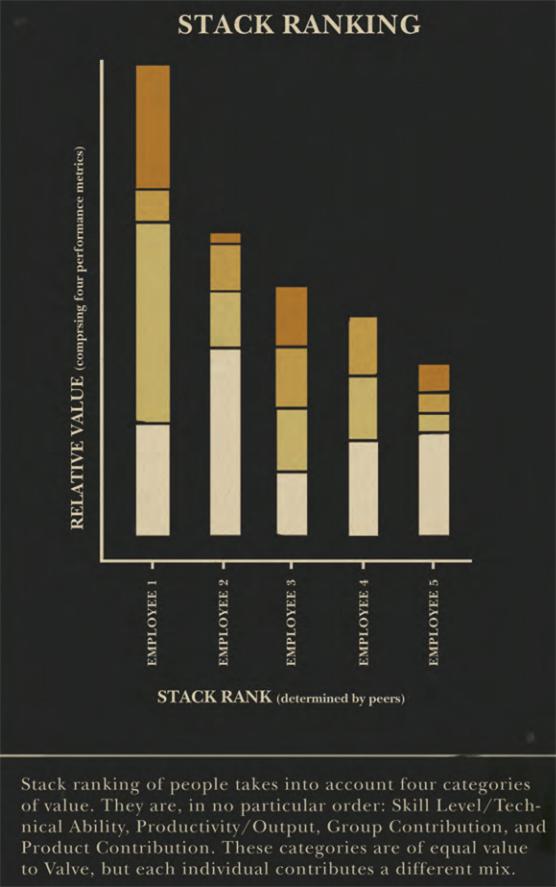
Notice that there’s no long list of patriarchical, corpo-BS ditties like these in the four simple Valve metrics:
- Takes initiative and is a self-starter
- Knows how to acquire resources when needed
- Manages time well
- Knows how to prioritize tasks
- Yada, yada, yada
As you might guess, the stack rankings are used for salary adjustment:
…stack ranking is done in order to gain insight into who’s providing the most value at the company and to thereby adjust each person’s compensation to be commensurate with his or her actual value. Valve pays people very well compared to industry norms. Our profitability per employee is higher than that of Google or Amazon or Microsoft, and we believe strongly that the right thing to do in that case is to put a maximum amount of money back into each employee’s pocket. Valve does not win if you’re paid less than the value you create. Over time, compensation gets adjusted to fit an employee’s internal peer-driven valuation. – The Valve Employee Handbook
Whenever I serendipitously discover jewels in the rough like Valve, SAS Institute, HCL Technologies, Semco, Zappos.com, etc, I always ask myself why they’re rare exceptions to the herd of standard, cookie-cutter corpricracies that dominate the business world. The best answer I can conjure up is this Ackoff-ism:
The only thing harder than starting something new is stopping something old. – Russ Ackoff
But it’s prolly something more pragmatic than that. Since corpo profits seem to keep rising, there is no burning need to change anything, let alone blow up the org and re-design it from scratch to be both socially and financially successful. That would be like asking the king to willingly give up the keys to his kingdom.
“T”, “Hyphen”, And “I” People
In this:
the company talks about “T” people:
We value “T-shaped” people. That is, people who are both generalists (highly skilled at a broad set of valuable things—the top of the T) and also experts (among the best in their field within a narrow discipline—the vertical leg of the T). We often have to pass on people who are very strong generalists without expertise, or vice versa. An expert who is too narrow has difficulty collaborating. A generalist who doesn’t go deep enough in a single area ends up on the margins, not really contributing as an individual.
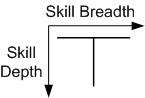
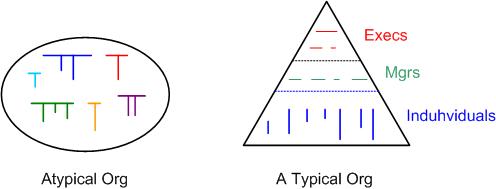
That’s too bad for the typical borg. These beasts actively recruit and develop horizontal “hypen” (mgrs, execs) people and vertical “I” (induhvidual contributors) people. Of course, the stewards of these dinosaurs get what they wish for. On top of that, anybody who tries to self-improve towards a “T” person is silently ignored. It would screw up the nice and tidy employee-in-a-box process of emasculation.
Glad To Be Of Service
Much of my thinking on hierarchy and unconsciously veiled corpo-insanity is founded on the ideas of systems thinkers and cyberneticians like Ackoff, Deming, Beer, Ashby, Wiener, Forrester, Meadows, Senge, Wheatley, Warfield, Bateson, Gall, Powers, etc. But mostly, my dirty thinking is rooted in the life work of William T. Livingston and his most influential mentor, Rudy Starkermann.
Over the years, Bill has always claimed that his work on socio-technical dysfunction may not be right, but it is irrefutable because it is derived from natures laws (mostly thermodynamics and control theory). And in walking his talk, Bill constantly solicits feedback and asks for counterexamples that disprove his theories.

After I discovered and wrote about Valve Inc, I threw this skunk on my friend’s table:
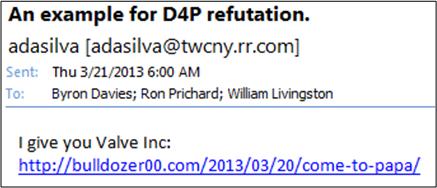
Here’s Bill’s response and my response to his response:
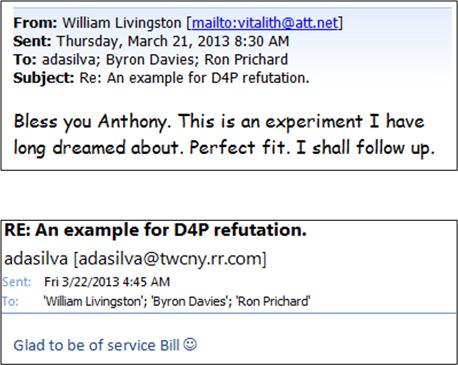
With his approval, which I have no doubt whatsoever that I’ll receive, I’ll try to decode and post the results of Bill’s research when I get it.
Related articles
- D4P Has Been Hatched (bulldozer00.com) ( Download the D4P book for free)
- D4P And D4F (bulldozer00.com)
- D4P4D (bulldozer00.com)
- D4P4D Tweetfest (bulldozer00.com)
Come To Papa!
I recently listened to a fascinating podcast interview of Valve Inc‘s “economist-in-residence“, Yanis Varoufakis. According to Yanis, the company is still organizationally flat after 17 years of existence.
The thought early on at Valve was that the maximum limit to flatness would be around 50-60 people. Above that, in order to keep the wheels from falling off, some form of hierarchy would be required for concerted coordination. However, currently at 300+ employees, Valve has managed to blow through that artificial barrier and remain flat. Mind you, this is not a company solely made up of like-thinking engineers. There are also artists, animators, writers, and accountants running around like a herd of cats inefficiently doing the shit that brings in $1B in revenue each year.
According to Yanis, in order to maintain their egalitarian culture, Valve can’t afford to grow too quickly. That’s because they have to deprogram people who are hired in from hierarchical borgs as former bosses who expect others to work for them, and former workers who expect to be “directed” by a boss. If Valve didn’t do this, their culture would get eaten alive by the pervasive and mighty command-and-control mindset. The spontaneity, creativity, and togetherness that power their revenue machine would be lost forever.
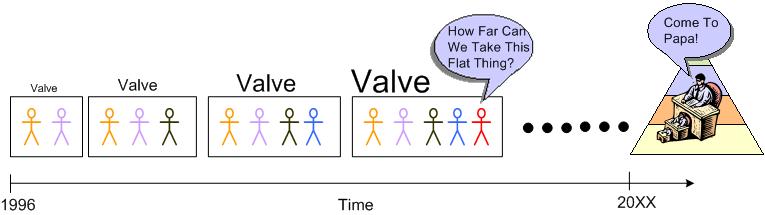
Nevertheless, Valve is pragmatic with respect to hierarchy:
“Valve is not averse to all organizational structure—it crops up in many forms all the time, temporarily. But problems show up when hierarchy or codified divisions of labor either haven’t been created by the group’s members or when those structures persist for long periods of time. We believe those structures inevitably begin to serve their own needs rather than those of Valve’s customers. The hierarchy will begin to reinforce its own structure by hiring people who fit its shape, adding people to fill subordinate support roles. Its members are also incented to engage in rent-seeking behaviors that take advantage of the power structure rather than focusing on simply delivering value to customers.” – The Valve employee handbook
Whether Valve knows it or not, their success is due to their respect of some of Gall’s system laws:
- Systems develop goals of their own as soon as they come into existence – and intra-system goals come first.
- Loose systems last longer and work better. Efficient systems are dangerous to themselves and others.
It’s What We Do
Error correction is what we are doing every instant of our lives – John Gall (The Systems Bible, P84)
OMG! Mr. Gall’s wisdom is spot on with William T. Powers‘ PCT, which in effect states that:
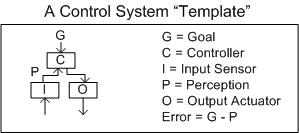
We are a mysterious stacked aggregate of thousands of little control systems acting continuously on our environment in a manner which corrects errors between what we desire and what is. (BD00 via William Powers)
Need some dorky picture to visualize the undecipherable message? For context, try this one first:
Next try this model of “us” (actually, anything that’s alive):
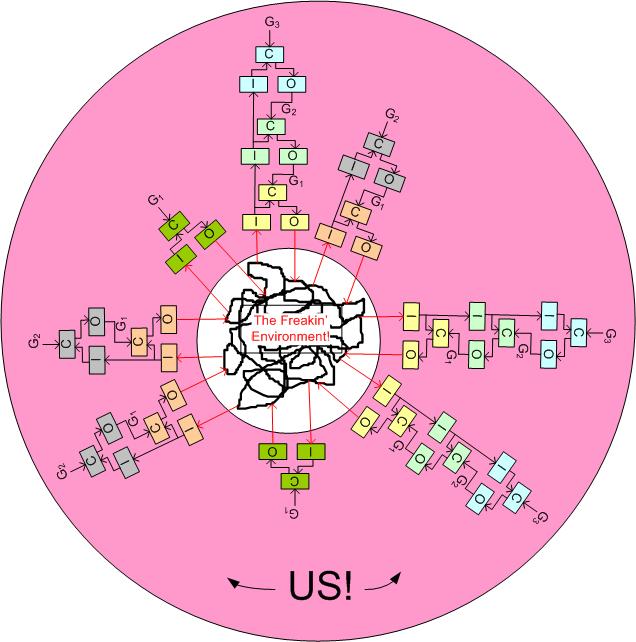
When we go to sleep, our conscious mental control system building blocks temporarily go dormant. However, those at the periphery of the stack which directly penetrate the physical “us/environment” boundary never sleep – because the environment never sleeps. These unsung workhorse heroes at the bottom of the hierarchy symphonically collaborate to keep our blood pressure, temperature, breathing, heart beat, etc, within some preset genetic limits so that we can wake up the next morning! And the little buggers do this by…. continuously correcting for errors between what the bazillion “controlled variables” are and what they should be. Error correction is what we do.
Note that without nature’s loving cooperation in keeping the variations in the environment within the controllable limits of our little friends, we wouldn’t be here now – we wouldn’t have even “begun“. What a joyous and miraculous dance of life, no?
So, the next time someone asks you what you do for a living, tell them that you correct errors.
Related articles
- Command Vs. Control (bulldozer00.com)
- Bankrupt Models (bulldozer00.com)
- From The Ground Up (bulldozer00.com)
- Cross-Disciplinary Pariahs (bulldozer00.com)
- Normal, Slave, Almost Dead, Wimp, Unstable (bulldozer00.com)
- Extrapolation, Abstraction, Modeling (bulldozer00.com)
- Nine Plus Levels (bulldozer00.com)
Forrest Gumption
A gumption trap is an event or mindset that can cause a person to lose enthusiasm and become discouraged from starting or continuing a project. – Wikipedia
Some people credit Robert Pirsig with coining the term “gumption trap“. In his inimitable book, “Zen And The Art Of Motorcycle Maintenance“, he wrote a brilliant section classifying, listing, and explaining a gaggle of gumption traps. Two in particular stood out to BD00: anxiety and boredom.
Anxiety
You’re so sure you’ll do everything wrong you’re afraid to do anything at all. Often this, rather than “laziness,” is the real reason you find it hard to get started. This gumption trap of anxiety, which results from overmotivation, can lead to all kinds of errors of excessive fussiness. You fix things that don’t need fixing, and chase after imaginary ailments. You jump to wild conclusions and build all kinds of errors into the
machinesoftware because of your own nervousness. These errors, when made, tend to confirm your original underestimation of yourself. This leads to more errors, which lead to more underestimation, in a self-stoking cycle. The best way to break this cycle, I think, is to work out your anxieties on paper. Read every book and magazine you can on the subject. Your anxiety makes this easy and the more you read the more you calm down. You should remember that it’s peace of mind you’re after and not justa fixed machinehigh quality software. When beginning arepairjob you can list everything you’re going to do on little slips of paper which you then organize into proper sequence. You discover that you organize and then reorganize the sequence again and again as more and more ideas come to you. The time spent this way usually more than pays for itself in time saved on themachineproject and prevents you from doing fidgety things that create problems later on.Boredom
Boredom is the opposite of anxiety and commonly goes with ego problems. Boredom means you’re off the Quality track, you’re not seeing things freshly, you’ve lost your “beginner’s mind” and your
motorcycleproject is in great danger. Boredom means your gumption supply is low and must be replenished before anything else is done.
BD00 gets ensnared in the anxiety-gumption-trap whenever he finds himself marooned inside his head ruminating over a concern. On the other hand, BD00 rarely gets caught up in the boredom-gumption-trap. Not because he’s conquered his big, fat, ego, but because his curiosity and longing for understanding never wanes. He can’t even remember the last time he was bored. And to BD00, that’s a good thing.
How about you, dear reader? Which of these diametrically opposed gumption traps are you most susceptible to?

The Renaissance That Wasn’t
In the thoughtful and well-written article, “The Rise and Fall of Languages in 2012”, Andrew Binstock rightly noted that the C++ renaissance predicted by C++ ISO committee chairman Herb Sutter did not materialize last year. Even though C++ butters my bread and I’m a huge Sutter fan, I have to agree with Mr. Binstock’s assessment:
In fact, I can find no evidence that C++ is breaking into new niches at a pace that will affect the language’s overall numbers. For that to happen, it would need to emerge as a primary language in one of today’s busiest sectors: mobile, or the cloud, or big data. Time will tell, but I feel comfortable projecting that C++ will continue to grow in its traditional niches and will advance at the same rate as those niches grow.
Nevertheless, if you buy into Herb’s prognostication that power consumption and computing efficiency (performance per watt) will overtake programmer productivity as the largest business cost drag in the future, then the C++ renaissance may still be forthcoming. Getting 2X the battery life out of a mobile gadget or a .5X reduction in the cost to run a data center may be the economic ticket that triggers a deeper C++ penetration into what Andrew says are today’s busiest sectors: mobile, the cloud, and big data. However, if the C++ renaissance does occur, it won’t take hold overnight, let alone over the one year that has passed since the C++11 standard was hatched.
It’s tough to make predictions, especially about the future – Yogi Berra

Tainted Themes
In “The Collapse of Complex Societies“, Joseph Tainter defines “complexity” as:
Complexity is generally understood to refer to such things as the size of a society, the number and distinctiveness of its parts, the variety of specialized social roles that it incorporates, the number of distinct social personalities present, and the variety of mechanisms for organizing these into a coherent, functioning whole. – Joseph Tainter.
Joseph then defines “collapse” as:
A society has collapsed when it displays a rapid, significant loss of an established level of sociopolitical complexity. Collapse then is not a fall to some primordial chaos, but a return to the normal human condition of lower complexity. – Joseph Tainter
Mr. Tainter then surveys the landscape of historic, archaeological, and anthropological literature explaining the collapse of societies like the western Roman empire, the Mayans, the Hittites, the Mycenaeans, etc. He groups the theories of collapse into 11 “tainted” themes:

Joseph then skillfully makes a case that all these specialized themes can be subsumed under his simple and universal theory of collapse:

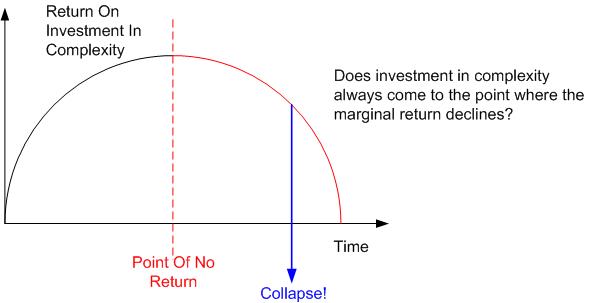
His theory goes something like this. As a society grows, it necessarily becomes more complex. Exceedingly more and more investment in complexity (infrastructure, basic services, defense, food production control, public tributes to the elite to maintain their legitimacy in the minds of the non-elites) is then required to hold the society together. However, as the graphic below shows, at some point in time, the marginal return on the investments in complexity reaches a tipping point at which the society becomes vulnerable to collapse from one or more of the subsumed themes.
To illustrate further, BD00 presents the dorky growth-to-collapse scenario below:
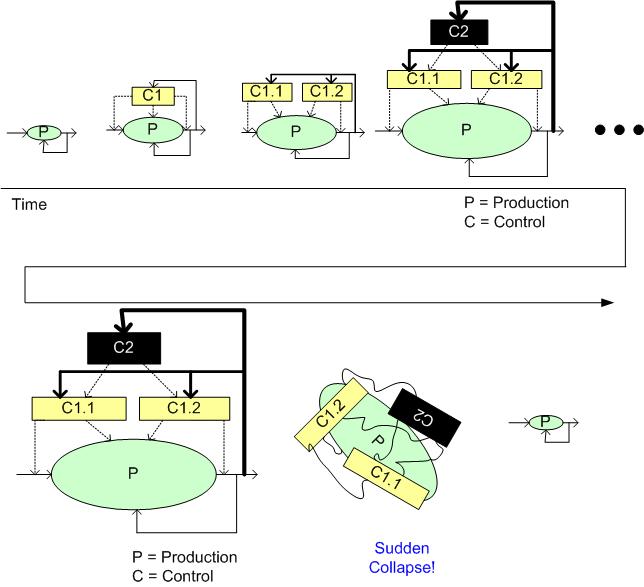
As shown, societal growth begets a larger and more internally diverse production subsystem. That same growth requires investment in more and varied control (Ashby’s law of requisite variety) over production so that “the center can hold” and the society can “retain its identity as a whole“. In this runaway positive feedback system, the growing army of controller layers siphons off more and more of the production outputs for itself – starving the production subsystem in the process.
To prevent the production subsystem from dispersing (or revolting) and keep the whole system growing, more and more investment is poured into production control (compliance and efficiency) in an attempt to increase output and keep both the production and control subsystems viable. However, as the control subsystem growth outpaces production subsystem growth and a caste system emerges, the control subsystem requires a larger and larger share of the production subsystem outputs for itself – which further weakens and constrains and alienates the production subsystem. Hence, the “declining marginal return on investment in complexity” machine is kicked into overdrive and the vulnerability to collapse appears on the horizon. D’oh!
In your growing “society“, is the controller subsystem growing faster than the production subsystem? Are more specialized controller/administration layers being added faster than producers? Is the caste system becoming more stratified and prejudiced? Are more and more processes/rules/policies being imposed on the production subsystem for increased compliance and efficiency? Is the army of growing controllers siphoning off more and more of the production system outputs for themselves? If so, then maybe your society is vulnerable to sudden collapse. But then again, it may not. Tainter’s thesis is simply a bland and drama-less, economically based theory. It might be tainted itself.
Say it taint so, shoeless Joe! – unknown kid

Why am I here?
WTF?
Meh!
D'oh!

My BTC Address



 Bulldozer00's Blog