Archive
Get Back To Work, Slackers
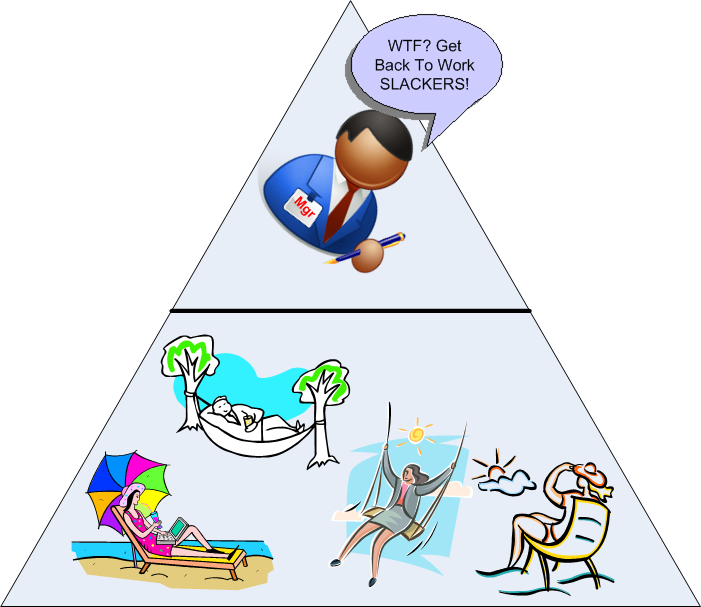
Penny Herscher, CEO of FirstRain, states in her blog:
We’ve made a terrific change this year to our vacation policy – which is basically not to have one…. We have a very intense culture today. People work hard, they work long hours inside and outside “normal business hours”, from home, from airplanes, and we don’t clock or watch the hours they work. So if we don’t clock the hours they are here, why should we clock the hours they are not? Why should we be tracking paperwork and forms when an employee takes the day off but we don’t do the same for when they work over a weekend.
She’s joking right? Trusting your employees and giving them total responsibility for managing their time? No way bro. That’s just not how it’s done! Poor FirstRain. Productivity is going to plummet and a trip to bankruptcy court is forthcoming, no?
Zappos Rocks Again
As a huge, huge, huge, (did I say youuuuuuuge-uh?), fan of Tony Hsieh and Zappos.com, I blabber about them often. Zappos latest action to make the whole world, yes, the whole world, a better place is to offer up a free, yes free, download of the audio version of the best seller, yes best seller, book “Tribal Leadership“. The link is here, yes here.

Even though I’ve stalked Zappos.com for years, until recently I’ve never bought anything from them because I’m not a shoe or clothes dude. Hell, I’m an old and unredeemable person of questionable integrity and questionable character and questionable morality and questionable <<add your own trait here if you know me>>, so I renew these things about every 10 years or when they fall apart; whichever comes first. However, even with zero revenue from me, they upgraded me to VIP status. This means that with every order I place, they’ll guarantee free overnight shipping. WTF, you say? Uh, the only answer that I can give to you is: They’re fuckin’ Zappos.com dude, that”s why! Oops, I hope the F-bomb didn’t make you mad and send you to the altar to pray for me. If it did, then maybe you shouldn’t be wasting your time reading this blasphemous blog 🙂
Loop Of Disrespect
In most companies, “respect” is either an explicit or implicit core value. Is it respectful to repeatedly watch, and covertly condone, project teams working 50-60 hour, unpaid overtime weeks for years at a time to meet some schedule that they most likely had no hand in making? Since the overtime is not paid, it isn’t tracked and future schedule estimates derived from past performances don’t accurately reflect the effort needed to get the job done. Thus, the practice is a self-reinforcing loop of disrespect. But hey, since virtually all corpricracies operate that way, the practice must not be disrespectful, right?
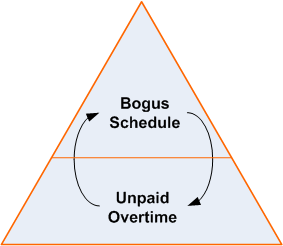
Demanding respect while not giving it, or pretending to give it, creates mediocracies. And since respect and loyalty are intimately coupled, demanding loyalty without giving respect doesn’t work too well either.
Strategic And Cautious
At nights and on weekends we cry out for human rights and freedom of speech, and then we go to work and become strategic and cautious about our every word for fear we will be seen as disloyal or uncommitted. – Peter Block
The above quote reminds me of many meetings that I’ve attended. In one of these watch-out-what-you-say-or you’ll-be-in-deep-shit group fear fests, the topic of a long time dedicated and highly productive employee leaving the company popped up. The frustrating and sad thing about the experience was that even though virtually everyone knew who the person was, no one spoke his name – including wimpy me. It was like an unwritten taboo, as hinted by Block’s quote above. At the time, I thought of getting up and yelling:
“Damn it! His name is XXXX. Why can’t anyone freakin’ speak it? Even though I think most of you know who we’re talking about, what harm would befall us if we spoke his name to the ones who don’t know? Why so much fear and secrecy?”
Of course, I only thought the thought and I didn’t say squat….. preferring to remain strategic and cautious.

Us And Them
Poor org leaders, or SCOLs, either maintain a stratified “Us And Them” (UAT) line in their orgs or worse – they purposefully create one. By hiring clones of themselves, multiple UAT lines of demarcation appear; choking off open, honest, inter-layer communication and breeding mistrust and disrespect.

Great leaders, or PHORs, skillfully obliterate UAT lines where they exist, or they heroically prevent UAT lines from arising in the first place. Of course, that’s what makes them great leaders.


Google, Zappos, And Me
Check it out:

I was preparing to write a blog post about Zappos.com’s core value “Be Humble“, but I forgot what number it was. So, I decided to Google it, and the above picture is what appeared in my browser. WTF? Holy Shite!
If this doesn’t get me a free pass to Zappos Insights, I don’t know what will!!!!!
Note: I swear that the pic wasn’t photo-shopped. I ain’t no Bernie Madoff.
A Key Ingredient
As Tony Hsieh states in “Delivering Happiness“,
A key ingredient in strong (business) relationships is to develop emotional connections. – Tony Hsieh
In my fantasy world, I find this extremely ironic because, in “business”, most corpricracies only anoint those who can cleverly camouflage their emotions to exalted and coveted leadership positions. And yet, here is Mr. Chez, the CEO of a profitable billion dollar company in the cutthroat shoe retail industry, “nicely” flipping the finger at mainstream American business and the esteemed B-school advice they rode in on.
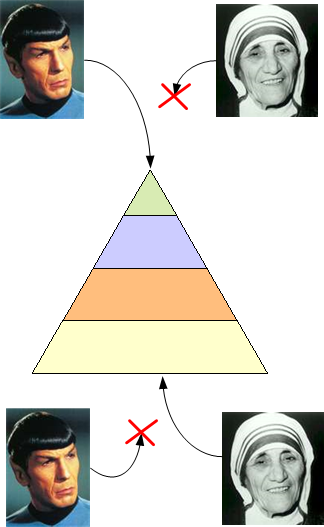
It’s funny how “passion”, which can be defined as a “strong emotion“, is demanded of the DICforce, but Spock-like emotional control is required by SCOLs and BOOGLs for ascension to the throne.
Why Do You Guys Suck?
In this Gary Hamel post, Extreme Management Makeover, Mr. Hamel tells the story of HCL Technologies CEO Vineet Nayar’s passionate effort to turn his company’s culture upside down. Read the article to discover the slew of wildly unorthodox actions that Vineet executed to achieve his goal. As a sampling of Mr. Nayer’s courage and determination to buck the status quo, check this one out:
HCLT employees are able to rate the performance of any manager whose decisions impact their work lives, and to do so anonymously. These ratings are published online and can be viewed by anyone who has submitted a review. This visibility challenges managers to be more responsive and exercise their authority judiciously. The number and organizational scope of the reviews a manager receives are also a good indicator of an individual’s zone of influence—is he or she adding value across a wide swath of the company, or only within a narrow sphere? Importantly, this “feedforward” process isn’t connected to compensation and promotion decisions. It is purely developmental. Nevertheless, there aren’t many hiding places left at HCLT for mediocre managers.
Want another zinger?
Early on, Vineet and his leadership team set up an online forum and encouraged employees to ask tough questions and offer honest feedback. Nothing was censored on the “U&I” site; every post, however virulent, was displayed for the entire company to see. Vineet recalls that in the beginning, “virtually 100% of the questions were dirty questions. ‘Why do you guys suck?’ ‘Why does your strategy suck?’ ‘Why aren’t you living up to your values?’’ While some managers bemoaned the fact that all of the company’s soiled laundry was now online, employees lauded the forum as a symbol of HCLT’s commitment to transparency and as another way to hold top management accountable. The U&I portal had another value: it was also an early warning system for critical issues facing the company.
Does your company even have a DICforce-to-management U&I portal? If you’re lucky enough to have one, is it anonymous and uncensored so that the submitted questions are more than just cream puffs?
 If Vineet was in any position other than the CEO, do you think his idea of “employees first, customers second” would have any chance at all of being heard, let alone being placed into execution? Do you think managers in general explore the landscape for innovative management practices and weird, heretical companies like HCLT, Zappos.com, SAS Institute, SEMCO, et al?
Much To Like
There’s much to like in Zappos.com CEO Tony Hsieh’s new book: “Delivering Happiness“. In addition to detailing the inspiring rags-to-riches Zappos.com story, Mr. “Chez” shares many nuggets of wisdom that he discovered along the way:
Don’t play games that you don’t understand, even if you see lots of other people making money from them.
It doesn’t matter how flawlessly a business is executed if it’s in the wrong business or if it’s in too small of a market.
Without conscious and deliberate effort, inertia always wins.
The presentation of the truth is as important as the truth.
Never outsource your core competency. If we were trying to be about customer service, we knew that we shouldn’t be outsourcing that (call center).
Without a separation of work and life, it’s remarkable how values can be exactly the same.
Don’t measure call times, don’t force employees to upsell, and don’t use scripts.
A key ingredient in strong relationships is to develop emotional connections.
It’s not what you say or do, but how you make people feel that matters the most.
For individuals, character is destiny. For organizations, culture is destiny.
As it turns out, many of the best ideas came about while having drinks at a local bar.

Death By A Thousand Cuts
Zappos.com CEO Tony Hsieh has a new book out titled “Delivering Happiness“. Early in this heartwarming and wonderful little tome, he tells the story of the first real company he co-founded – LinkExchange. As LinkExchange grew and became more successful, he turned down offers of $1M (from BigFoot) and then $20M (from Yahoo!) to sell the company. He ended up selling out later for $265M to Microsoft. Tony’s personal take from the sale was a whopping $40M, of which $8M would be forfeited if he didn’t stay on for 1 year after the sale.
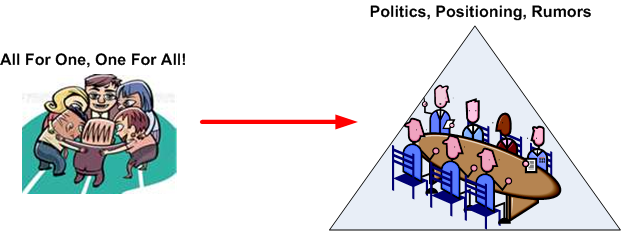
Before the sale of LinkExchange, he woke up one day wondering what happened to the company culture. Tony pondered how the day-to-day culture transformed from a joyous “one for all, and all for one” working environment into one that was dominated by “politics, positioning, and rumors“. He couldn’t put a finger on any one specific event or person(s) as the cause of the deterioration in culture, it was more like “death by a thousand cuts“; an insidious and undetectable rise in malady sustained by some unknown force.
After the sale of LinkExchange, Tony walked away from the company before his contracted year was up, leaving $8M on the table. His reasoning was that he already had plenty of money and his happiness was worth more than the extra $8M. The end of LinkExchange was the start of Zappos.com…..
I had decided to stop chasing the money, and start chasing the passion – Tony Hsieh

Why am I here?
WTF?
Meh!
D'oh!

My BTC Address



 Bulldozer00's Blog