Archive
Sergeant Schultz Defense
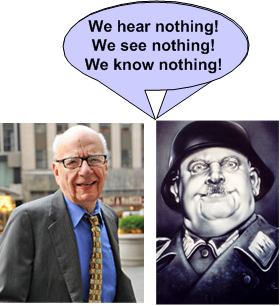
We’ve heard it before, we’re hearing it now from formerly unassailable media mogul Rupert Murdoch, and we’ll hear it again from other self-important papal figures. Yawn.
What will we hear, you ask? Well, it’s the ubiquitous Sergeant Schultz defense: “I hear nothing, I see nothing, I know nothing“. But ya know, the hot shot dudes who whip out this get-out-of-jail-free card may actually be right. If they “skillingfully” setup their borg’s structure and culture so that they can’t know, then they won’t.
Open For B’ness
Whoo Hoo! The “Frontal Assault Idiot” cafepress.com shop is now open for business. Scott Adams, eat your heart out.
Check out a sampling of the “must have” products that you’ve been waiting to empty your bank account for:
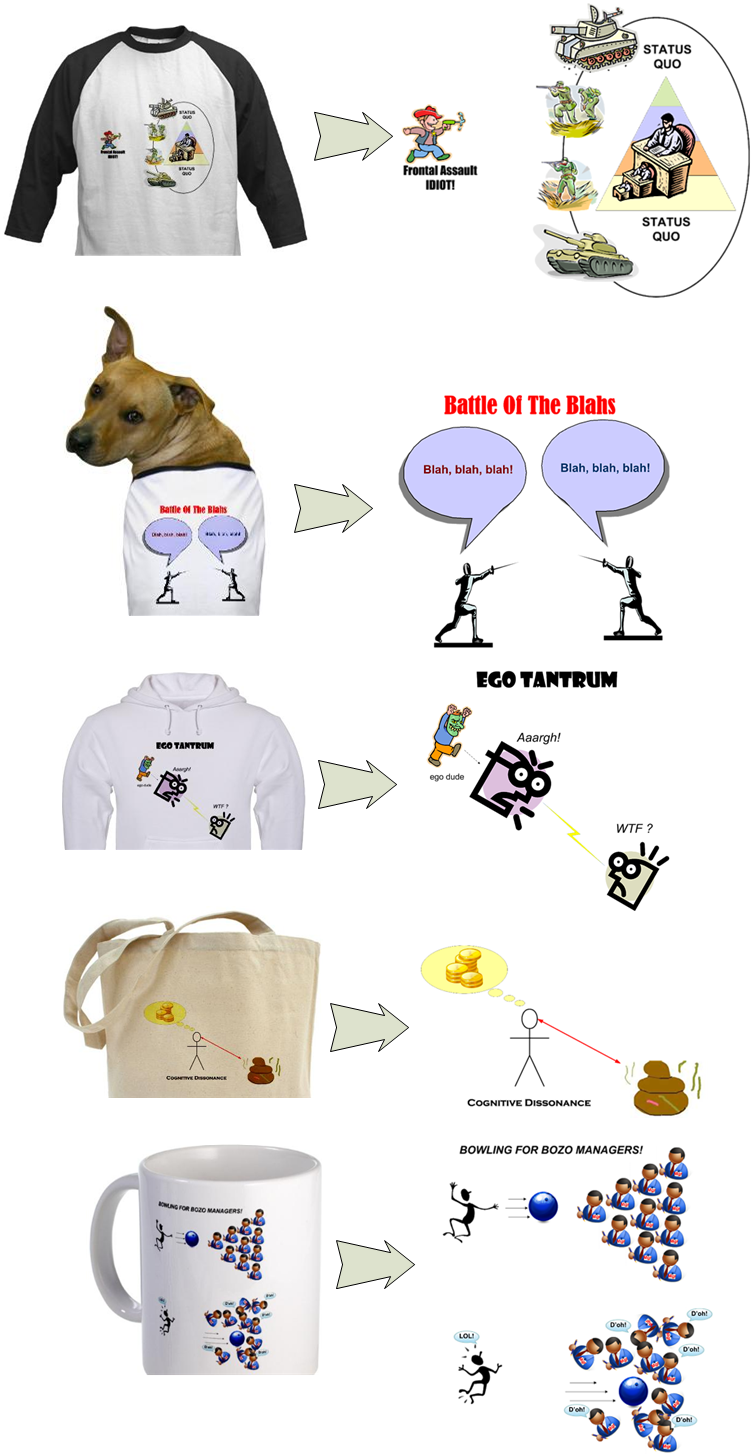 Unbelievably, and joyfully, I constructed this store and populated it with product designs in about six hours. Is that kool or what? However, each “free” storefront seems to only allow 12 designs to be posted for sale.
Here’s what my store dashboard look like at the moment (LOL!!!):
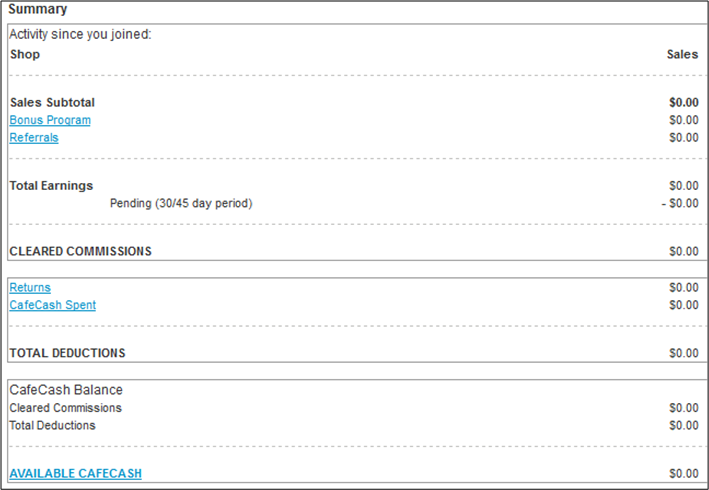
I’m gonna start a sequel, “The Frontal Assault Idiot II” shop, as soon as I finish totaling up my revenues from the debut shop. Don’t hold your breath, cuz it might take awhile to wash the green stank off of my greedy fingers.
Heartbroken, But Hopeful
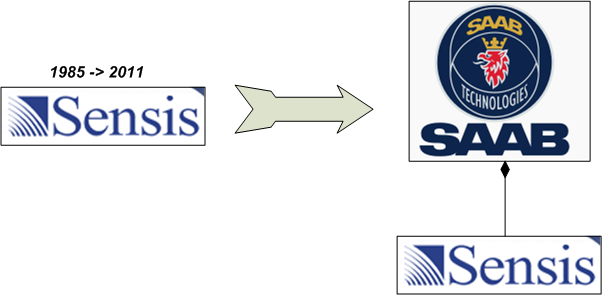
Well, it’s done. The public announcement has been made. The aerospace and defense industry company that I’ve been privileged to work at for 22 years, Sensis Corp., has been sold to SAAB AB.
I’ve been extremely lucky to have participated in the birth and growth of a vibrant, successful, and sovereign company. In 1987, I was recruited away from behemoth GE Inc. by some great people to work at tiny Sensis Corp. I checked in as employee number 13. Before painfully contracting to 500+ people through recent layoffs and a post-layoff loss of some incredibly key engineering talent, the company steadily grew over the years from a core of 7 people to over 800+.
The second law of thermodynamics dictates that nothing stays the same forever. Like all natural laws, it’s impersonal and it applies to all people, things, and enterprises. Thus, it’s time to move on and work on new projects/products with new people. I’m heartbroken, but hopeful for the future because…..
“When you’re through changing, you’re through.” – Bruce Barton
P Equals R Minus C
Being a dufus, I’m constantly trying to use the power of abstraction (a.k.a selective ignorance) to syntegrate complex issues, problems, situations, and relationships up into ridiculously simple generalizations that are, of course, wrong. For example, take the classic business performance equation below.
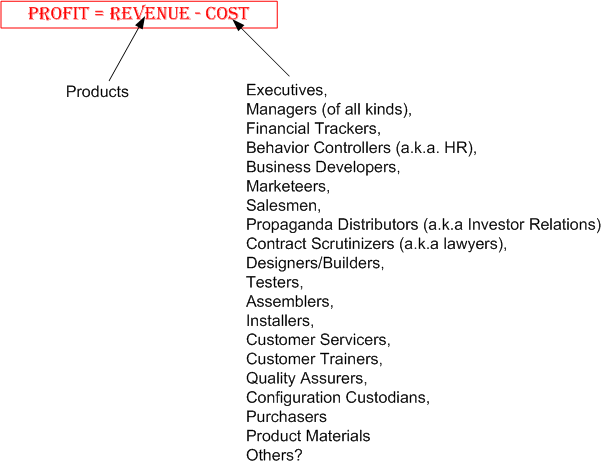
In the sliver of dufus-land that aligns with reality, if revenues don’t consistently exceed costs, it’s just a matter of time before a new or established business goes kaput, no?
When a company starts up, by definition, it has only a handful of people who fulfill all of the roles in the right hand side of the above figure needed to prosper and develop. Over time, “approved” micro-specialization, infectious hubris, empire-building, and a whole lotta BS accompanies the obsession to”grow the enterprise“. These sanctioned behaviors usually (but not always) lead to an unsustainable and cost heavy behemoth that brings the party to an end – all under the eyes of the self-proclaimed brilliant dudes who run the show. Bummer.
Three Bottom Lines
“Management measures what’s easy, not what’s important.” – Unknown
“You can only measure 3% of what matters.” – W. E. Deming
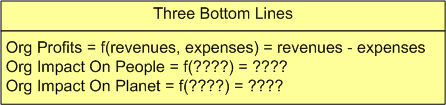
I don’t recall where, but I remember seeing the idea of “three bottom lines” being proposed somewhere in an online article. The three bottom lines are “profits, people, and planet“.
As in quantum physics, the hurdle to overcome is “the measurement problem“. Unlike profits, which are simple to measure and track, how do you come up with standard, objective measures of an org’s effect on its people and on the planet?
When The Spigot Runs Dry
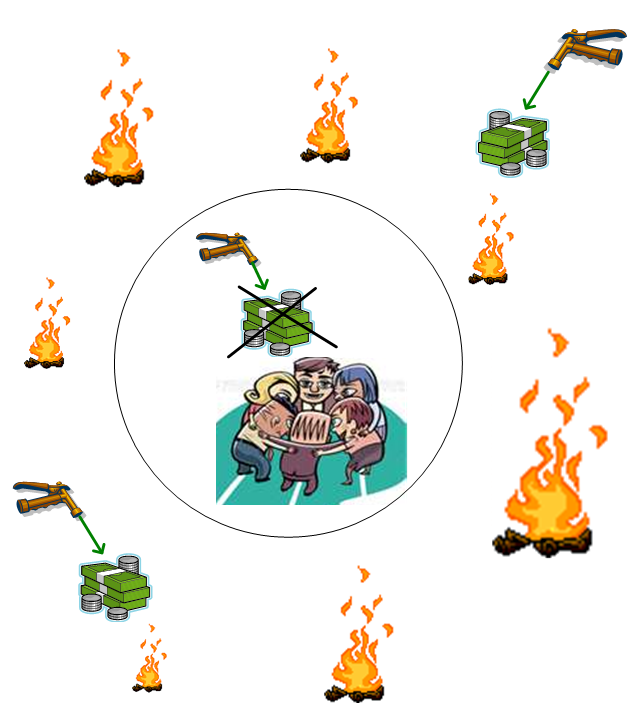
It was recently hinted to me that, for a legitimate business reason, the fun and exciting distributed systems IR&D (Internal Research and Development) software project that I’m working on might get canned. I sadly agree that if there are no customers for a product, and day-to-day fires are burning all over the place, it’s most definitely a legitimate business reason to turn off the financial spigot.
In addition to the “hint“, several important technical people have been reassigned to other maintenance projects. Bummer, but shite happens.
Loops Of Distrust
Mistrust reigns everywhere. Governments distrust big businesses and vice versa. Big business heads (and I mean it both literally and figuratively), even though they often superficially espouse otherwise, distrust their low level, non-executive people.
The two cause-effect loop diagrams below crystallize the situation, no? On the left, more regulation begets more lobbying and lawyering – which begets more regulation. Bummer. On the right, more red tape begets more subversion – which begets more red tape. Double freakin’ bummer.
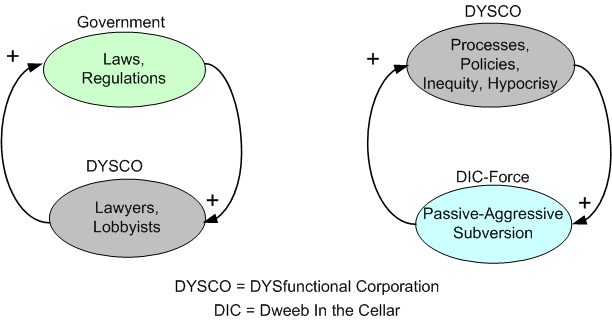
In the government-DYSCO cat-and-mouse duel, government, even though it’s a massively dysfunctional CCH itself, wants its version fairness and equity to prevail. In the DYSCO-DICforce scenario, the DICforce wants its version of fairness and equity to prevail. In both scenarios, the DYSCO DJs want an unfair advantage.
Note: Not all companies are DYSCOs. Only DYSCOs are DYSCOs. Every once in a blue moon I state a disclaimer like this because some people may think I’m a black-and-white binary thinker.Those that do may be binary thinkers themselves?
Money, Tools, Materials, Know-How, Products
Since you’ve stopped by, check out the company-centered, system loop diagram below. The model is composed of three interdependent parts: the company, the customers, and the suppliers. In equilibrium, when all is well:
- The company produces products that are paid for, and consumed by, customers.
- The company purchases tools and materials from suppliers.
- The company uses the tools, materials, and the knowledge of its workforce to create the products that sustain the viability of the company.
- The company’s cash inflow exceeds it’s cash outflow
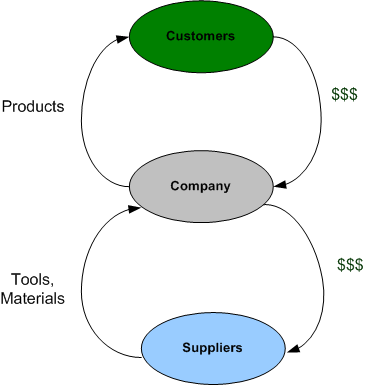
Note that if any of the links in the system get severed, the company collapses. If the products stop flowing out of the company, the life-giving cash stops flowing in. If the cash stops flowing in, the products stop flowing out. If the tools and materials stop flowing in, the products stop flowing out. From the company’s perspective, products lead to cash and cash leads to more products in a positive, self-reinforcing, feedback loop.
Using the diagram below, let’s look in more depth at the company’s cash inflows and outflows. In stable, steady-state operation, the cash inflow is managed competently by the executive team. After taking their cut of the action, the executives push some cash downward through the patriarchy to keep the operation humming and they approve of all outflows to suppliers.
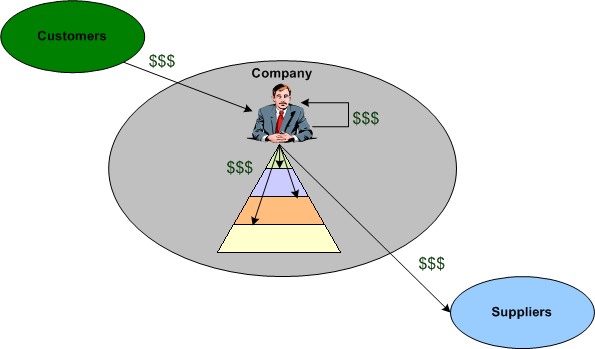
What the picture doesn’t show, is the indirect source of the customer cash – the company’s product set. Lets augment the diagram above and close the loops:
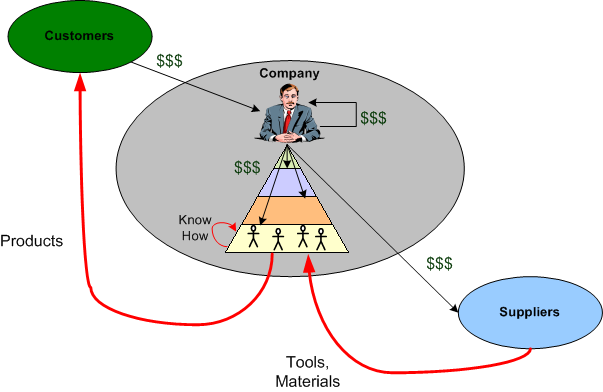
There are a bazillion external, and especially, internal threats to system viability. Externally, customers can run out of cash and suppliers can go bust. Internally, bureaucratic little Hitlers, byzantine processes, lack of investments in tools and people, inequities in status and pay, silo-to-silo infighting, and poor hiring practices are among the myriad of threats that can contribute to corpo implosion. Of course, the purpose of management is to gracefully overcome the threats. But hey, regardless of whether executives and their management appointees are the cause of success or failure, they still have the right to high status and high compensation because…. well, just because.
Yahoo! Boohoo!
Unless you were born yesterday, you’ve probably heard about the death spiral that former internet great Yahoo! has commenced. In this blarticle from TechCrunch, “Former Yahoo Engineers Shed Light On Why Delicious And Other Acquisitions Failed“, a couple of quotes from former employees brought a tear to my eye.
…it does provide a picture of a company that bogged its acquired-startups down in its company’s administrative BS. As Chad Dickerson, former Yahoo developer evangelist and the current CTO of Etsy comments, “In my experience, entrepreneurs moving into Yahoo! often got stuck doing PowerPoints about “strategy” instead of writing code and shipping products.”
Elliott-McCrea writes: I recently pulled up a worklog I was keeping in 2008-2009, and I found 18 meetings scheduled over a 9 month period discussing why Flickr’s API was poorly designed and when we’d be shutting it down and migrating it to the YOS Web Services Standard.
What I’d like to know is: “Did any of the layers of corpo honchos have any conscious clue that the patriarchical and bureaucratic monster they brought to life was killing the golden goose?” What do you think?

What We Look for in Founders
In “What We Look for in Founders“, Y Combinator principal Paul Graham lists the top 5 traits that his vulture capital investment company looks for in a would-be entrepreneur:
- Determination
- Flexibility
- Imagination
- Naughtiness
- Friendship
While writing about “determination”, Mr. Graham says:
“We thought when we started Y Combinator that the most important quality would be intelligence. That’s the myth in the Valley.”
Note that the following traits that pervade toxic corpocracies everywhere are not on the list:
- infallibility
- arrogance
- entitlement
- image
- bloodline


Why am I here?
WTF?
Meh!
D'oh!

My BTC Address



 Bulldozer00's Blog