Archive
Codecharts
l felt the need to share this e-mail exchange with a fellow colleague.

The Magical Number 30
In agile processes, especially Scrum, 30 is a magical number. A working product increment should never take more than 30 days to produce. The reasoning, which is sound, is that you’ll know exactly what state the evolving product is in quicker than you normally would under a “traditional” process. You can then decide what to do next before expending more resources.
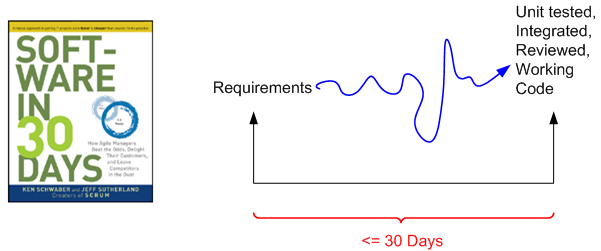
The trouble I have with this 30 day “law” is that not all requirements/user-stories/function-points/”shalls” are created equal. Getting from a requirement to tested, reviewed, integrated, working code may take much longer – especially for big, distributed systems or algorithmically dense components.
Arbitrarily capping delivery dates to a maximum of 30 days and mandating deliveries to be rigidly periodic is simply a marketing ploy and an executive attention grabber. When managers and executives accustomed to many man-months between deliveries get a whiff of the “30 day” guarantee, they: make a beeline to the nearest agile cathedral; gleefully kneel at the altar; and line up their dixie cups for the next round of kool-aid.

Just Say No!
Whoo Hoo! The Dr. “No” movement is upon us!
One currently popular way to carve out a money-making niche for yourself is to simply prefix any popular technology with the word “No“. Take your pick: NoUML, NoSQL, NoWaterfall, NoCMMI, NoBDUF, NoSh*t.
How about NoAgile? Who’s gonna be the brave NoSoul that goes there?
Clean And Jagged
Suppose you’re developing a software-intensive product and you have to choose to write your app code on top of two competing infrastructure platforms:

Well, duh. I think I’ll take the candidate on the left. That way, if the code I write ends up being costly to maintain, it’s all my fault. I wasn’t “forced” to write crappy, jaggy code by having to comply with the platform:
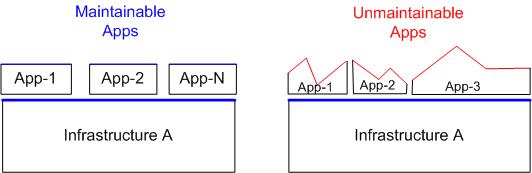
But wait! Suppose either the clean infrastructure doesn’t exist or (more likely) you’re “mandated” to write your apps on top of the jaggy infrastructure. In this situation, here’s the best and worst we can do:

In both cases, our code has some unwanted “jagginess” to it – some forced upon us by the platform and some we introduced ourselves.
In summary, our code can take on one of the forms below. The two on the left, written on top of the clean infrastructure, are less costly to maintain than the two written on the right.
 So, what’s the purpose of this post? Uh, I dunno. I started sketching out the graphics first and then I thought some interesting insight would pop up as I wrote the accompanying words. But other than the utterly obvious advice to “choose a clean infrastructure over a jaggy infrastructure when you can“, nothing arose.
Writing is sometimes like that. You have nothing to say, but you write and babble away anyway. In case you haven’t noticed, I do that a lot. Bummer.
The WTF? Metric
Lo and behold! It’s the monstrously famous iron triangle:

Even though all three critical project factors should be respected equally, BD00 put “schedule” on top because the unspoken rule is “schedule is king” in many orgs.
Everyone who’s ever worked on an important, non-boondoggle, project has heard or spoken words like these:
“I’m concerned that we’re exceeding the budget.”
“I’m afraid that we won’t meet the schedule commitment.”
But how many people have heard words like these:
“I fear that our product quality won’t meet our customer’s expectations.”
Ok, so you have heard them, but stop raining on my parade and let’s not digress.
The reason that quality concerns are mentioned so infrequently relative to cost and schedule is that the latter two objective project attributes are easily tracked by measuring the universally accepted “money” and “time” metrics. There is no single, universally accepted objective quality metric. If you don’t believe BD00, then just ask Robert Pirsig.
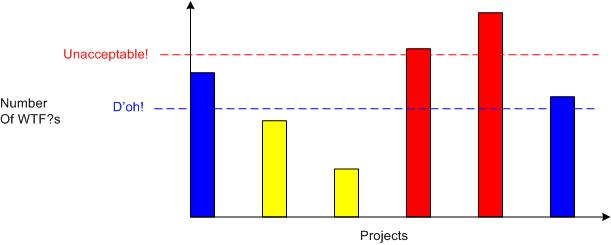
To raise quality up to the level of respectability that schedule and cost enjoy, BD00 proposes a new metric for measuring quality: the “WTF?“. To start using the metric, first convince all your people to not be afraid of repercussions and encourage them to blurt out “WTF?” every time they see some project aspect that violates their aesthetic sense of quality. Then, have them doggedly record the number and frequency of “WTF?”s they hear as the project progresses.
Before you know it, you’ll have a nice little histogram to gauge the quality of your project portfolio. Then you’ll be able to…, uh, you’ll be able to… do something with the data?
Components, Namespaces, Libraries

Regardless of which methodology you use to develop software, the following technical allocation chain must occur to arrive at working source code from some form of requirements:
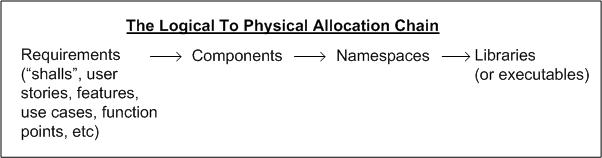
The figure below shows a 2/6/13 end result of the allocation chain for a hypothetical example project. How the 2/6/13 combo was arrived at is person and domain-specific. Given the same set of requirements to N different, domain-knowledgeable people, N different designs will no doubt be generated. Person A may create a 3/6/9 design and person B may conjure up 4/8/16 design.

Given a set of static or evolving requirements, how should one allocate components to namespaces and libraries? The figure below shows extreme 1/1/13 and 13/13/13 cases for our hypothetical 13 component example.
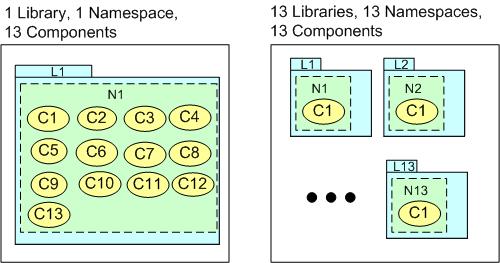
As the number of components, N, in the system design gets larger, the mindless N/N/N strategy becomes unscalable because of an increasing dependency management nightmare. In addition to deciding which K logical components to use in their application, library users must link all K physical libraries with their application code. In the mindless 1/1/N strategy, only one library must be linked with the application code, but because of the single namespace, the design may be harder to logically comprehend.
Expectedly, the solution to the allocation problem lies somewhere in between the two extremes. Arriving at an elegant architecture/design requires a proactive effort with some upfront design thinking. Domain knowledge and skillful application of the coupling-cohesion heuristic can do the trick. For large scale systems, letting a design emerge won’t.
Emergent design works in nature because evolution has had the luxury of millions of years to get it “right“. Even so, according to angry atheist Richard Dawkins, approximately 99% of all “deployed” species have gone extinct – that’s a lot of failed projects. In software development efforts, we don’t have the luxury of million year schedules or the patience for endless, random tinkering.
Burn Baby Burn
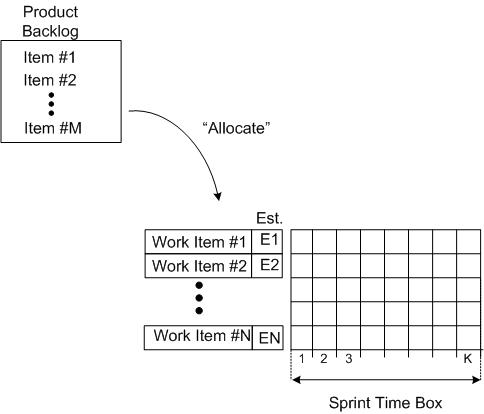
The “time-boxed sprint” is one of the star features of the Scrum product development process framework. During each sprint planning meeting, the team estimates how much work from the product backlog can be accomplished within a fixed amount of time, say, 2 or 4 weeks. The team then proceeds to do the work and subsequently demonstrate the results it has achieved at the end of the sprint.
As a fine means of monitoring/controlling the work done while a sprint is in progress, some teams use an incarnation of a Burn Down Chart (BDC). The BDC records the backlog items on the ordinate axis, time on the abscissa axis, and progress within the chart area.
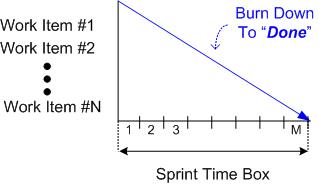
The figure below shows the state of a BDC just prior to commencing a sprint. A set of product backlog items have been somehow allocated to the sprint and the “time to complete” each work item has been estimated (Est. E1, E2….).
At the end of the sprint, all of the tasks should have magically burned down to zero and the BDC should look like this:
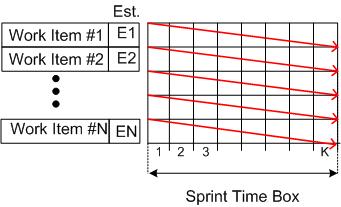 So, other than the shortened time frame, what’s the difference between an “agile” BDC and the hated, waterfall-esque, Gannt chart? Also, how is managing by burn down progress any different than the hated, traditional, Earned Value Management (EVM) system?
I love deadlines. I like the whooshing sound they make as they fly by – Douglas Adams
In practice, which of the outcomes below would you expect to see most, if not all, of the time? Why?

We need to estimate how many people we need, how much time, and how much money. Then we’ll know when we’re running late and we can, um, do something.
Fluency And Maturity
After reading about Martin Fowler‘s “levels of agile fluency”, I decided to do a side-by-side exploration of his four levels of fluency with the famous (infamous?) five “levels of CMMI maturity“:
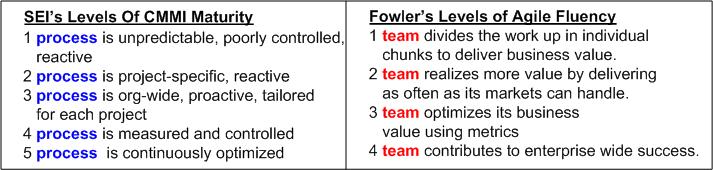
As you can easily deduce, the first difference that I noticed was that
The SEI focuses on the process. Fowler focuses on the team of people.
Next, I noticed:
To the SEI, “proactive” is good and “reactive” is bad. Proactive vs. reactive seems to be a “don’t care” to Fowler.
The SEI emphasizes the attainment of “control“. Fowler emphasizes the attainment of “business value“.
While writing this post, I really wanted to veer off into a rant demonizing the SEI list for being so mechanistically Newtonian. However, I stepped back, decided to take the high road, and formed the following meta-conclusion:
The SEI & Fowler lists aren’t necessarily diametrically opposed.
Perhaps the nine levels can be intelligently merged into a brilliant hybrid that balances both people and process (like the Boehm/Turner attempt).
What do you think? Is the side-by-side comparison fair, or is it an apple & oranges monstrosity?
Shortcutting The Shortcut
BD00 has heard from several sources that it takes about 10 years for a winning technology to make it into the mainstream. After starting off with a slow uptake due to fear and uncertainty, the floodgates open up and everybody starts leveraging the technology to make more money and greater products.
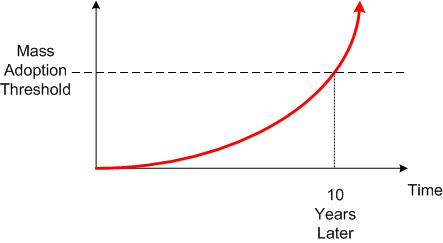
This 10 year rule of thumb surely applies to the “agile” movement, which recently celebrated its 10th anniversary. But as the new book below shows, the frenzy can get laughably outta control.
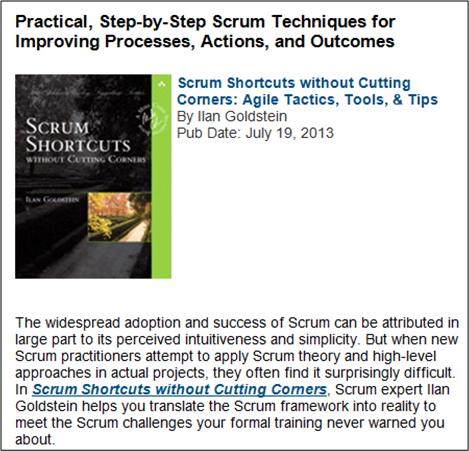
Not to rag too much on Mr. Goldstein, but sheesh. As if Scrum is not “fast” enough already? Now we’re patronizingly told that we need “intelligent” shortcuts to make it even faster. Plus, we idiots need to learn what these shortcuts are and how to apply them in a “step-by-step” fashion from a credentialed sage-on-a-stage. Hey, we must be idjets cuz, despite the beautiful simplicity of Scrum, Mr. Goldstein implies that we keep screwing up its execution.
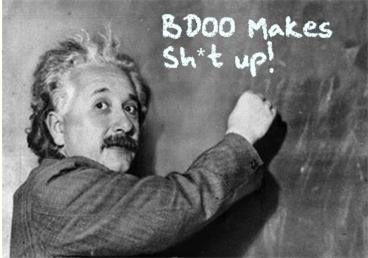
As usual, BD00 hasn’t read the ground breaking new book. And he has no plan to read it. And he has no plan to stop writing about topics he hasn’t researched “deeply“. Thus, keep reminding yourself that:
Possibly The Worst Ever
“It is wrong to suppose that if you can’t measure it, you can’t manage it – a costly myth” – W. E. Deming
“You can only measure 3% of what matters.” – W. E. Deming
Even though he’s more metrics-obsessed than I’d prefer, in general I’ve been a fan of Capers Jones‘s contributions to the software development industry. In his interesting InfoQ article, “Evaluating Agile and Scrum with Other Software Methodologies“, Capers defines, as one of his methodology candidates, possibly the worst software methodology ever conceived:
CMMI 1 with waterfall: The Capability Maturity Model Integrated™ (CMMI) of the Software Engineering Institute is a well-known method for evaluating the sophistication of software development. CMMI 1 is the bottom initial level of the 5 CMMI levels and implies fairly chaotic development. The term “waterfall” refers to traditional software practices of sequential development starting with requirements and not doing the next step until the current step is finished. – Capers Jones
I shouldn’t laugh, but LOL! In the “beginning“, virtually all software projects were managed in accordance with the “Chaos + Waterfall” methodology. Even with all the progress to date, I’d speculate that many projects unwittingly still adhere to it. Gee, I wonder how many of these clunkers are lurching forward under the guise of being promoted as “agile“.
Moving on to the scholarly guts of Mr. Jones’ article, he compares 10 of his personally defined methodologies in terms of several of his personally defined speed, quality, and economic metrics. He also uses his personal, proprietary models/equations/assumptions to calculate apparently objective results for evaluation by executive decision-makers.
I’m not going to discuss or debate the results of Capers’ comparisons because that’s not why I wrote this post. I wrote this post because personally, I don’t think personal and objective mix well together in efforts like these. There’s nothing wrong with smart people generating impressive numeric results that appear objective but are based on hidden/unknown personal assumptions and mental models. However, be leery of any and every numeric result that any expert presents to you.
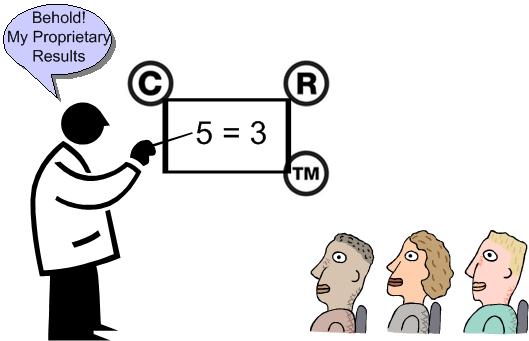
To delve more deeply into the “expert delusion“, try reading “Proofiness: How You’re Being Fooled by the Numbers” or any of Nassim Taleb‘s books.

Why am I here?
WTF?
Meh!
D'oh!

My BTC Address



 Bulldozer00's Blog