Heaps And Systems
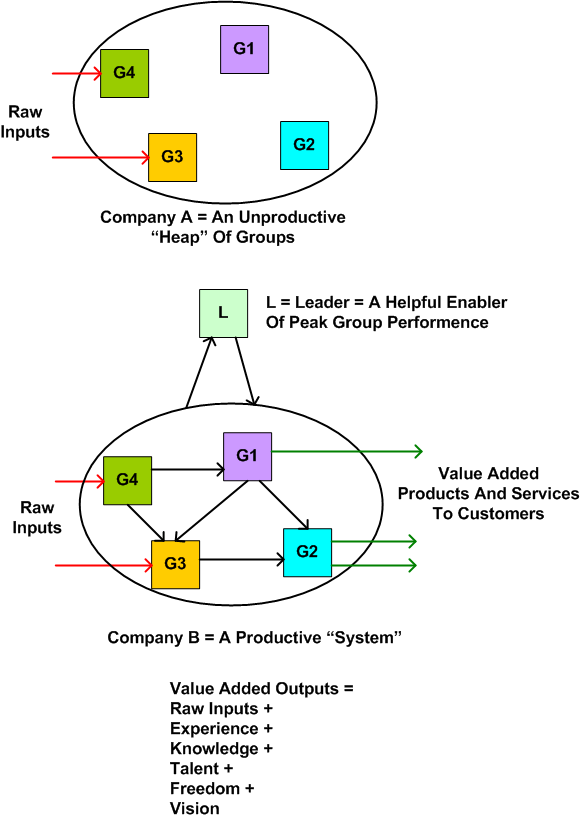
A “heap” is a collection of individual “parts”. A “system” is an intentionally designed set of interconnected parts with a purpose. The purpose of a system transcends AND includes the purpose of each of the individual parts. As an example, think of an automobile. If we disassemble one, we end up with a heap of individual parts. When these parts are assembled and interconnected in accordance with the purpose of human transportation as the goal, we may get a system. Structural design and interconnection are not enough. The system must be energized and steered so that purposeful behavior can be manifested. For a car, the energy is fuel and the steerer is a human being. For an organization of mutli-disciplined groups of people, the energy is motivation and the steerer is a leader. Without motivation and a leader, an organization of human groups is just an unproductive heap that consumes natural resources and doesn’t produce any value added output to share with the world.
The figure below shows two companies that are each comprised of 4 potentially diverse and productive groups of people. Company A is unconnected and leaderless. Thus, it just consumes resources from the external environment and produces nothing of value to share with the world. Company B is both connected and well led. What kind of company do you work for?
Look at company C in the illustration below. In this company, the leader has propelled his/her company to the head of the pack by creating the internal environment for, and nurturing the system’s internal groups and interfaces for peak performance. All of the internal connections and relationships between the groups are comprised of low latency and high bandwidth collaboration. Both high quality outputs and speed of execution distinguish company C from the rest of the herd.
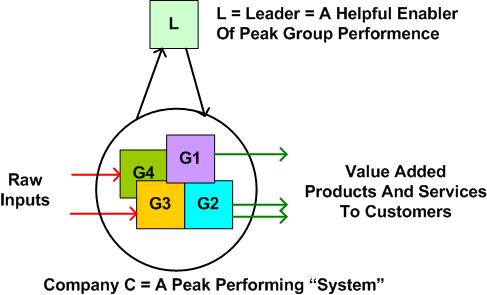
In a high performing system, the danger of over-optimization looms in the form of inflexibility. A system optimized for a single purpose tends to harden and become resistant to change overt time – corposclerosis sets in. The trick for the leader is to create and sustain a delicate balance between optimization and flexibility that adapts with the rapidly changing external environment.
In an attempt to over-optimize performance, some leaders unknowingly morph into “managers”. They start inserting subordinate management layers of questionable value between themselves and the productive subsystems of the company. They start creating and accumulating titles that distance themselves from the productive groups. These and other symbols of status divide and alienate instead of integrate and endear. Instead of guiding, steering, and nurturing, they start commanding, controlling, and constraining. Productivity plummets and quality of workmanship deteriorates.
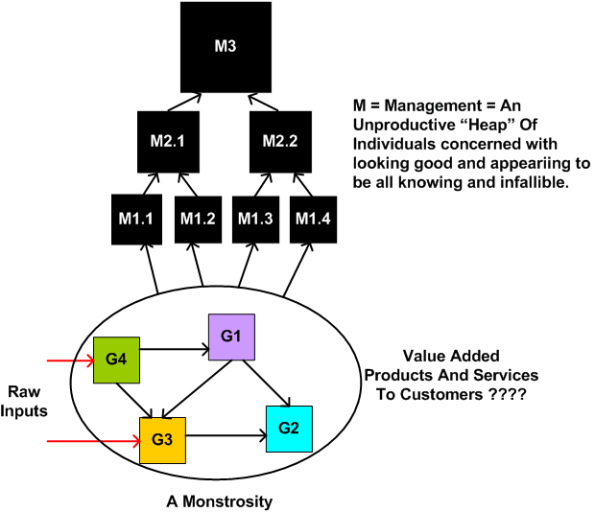
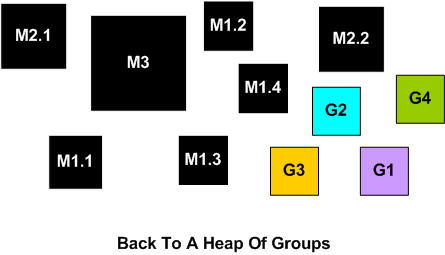
Because of increasing rules and procedures mandated by management, the internal interfaces between the formerly productive groups start transitioning into high latency and low bandwidth communication channels. In the worst case, like an overheated engine, the interfaces rupture and the system abruptly disintegrates; leaving an unconnected and purposeless heap of parts in its wake. Bummer.

Why am I here?
WTF?
Meh!
D'oh!

My BTC Address



 Bulldozer00's Blog