Archive
Unconstrained To Constrain
As I continue to slowly inhale Fred Brooks‘s book, “The Design Of Design“, I’m giddily uncovering all kinds of diamonds in the rough. Fred states:
“If designers use a structured annotation or software tool during design it will restrict the ease of having vague ideas, impeding conceptual design.”
Ain’t that the truth? Don’t those handcuffing “standard document templates, processes, procedures, work instructions” that you’re required to follow to ensure quality (lol!) frustratingly constrain you from doing your best work?
Along the same lines, Fred hits another home run in my ballpark (which is devoid of adoring and paying fans, of course):
“I believe that a generic diagramming tool, with features such as automatic layout of trees, automatic rerouting of relationship arrows, and searchable nodes, is better suited to (design) tree capture. Microsoft Visio or SmartDraw might be such a choice.”
Man, this one almost made me faint and lose consciousness. I live, eat, and breath “Visio”. Every picture that you’ve seen in this blog and every design effort that I undertake at work starts with, and ends with, Visio – which is the greatest tool of expression I’ve ever used. I’ve tried “handcuffers” like Artisan Studio and Enterprise Architect as software design aids, but they were too frustratingly complex and constraining to allow me to conjure up self-satisfying designs.
All designs must eventually be constrained so that they can be built and exploited for profit. But in order to constrain, one must be unconstrained. How’s that for a zen-like paradox?

Waiting For Management Guidance
In “The Design Of Design“, Fred Brooks laments that he used to be able to track new developments in the entire field of software engineering – which was born in 1968. In the present age, because of massive innovation, expansion, and deep specialization requiring steep learning curves, he realizes that there’s no hope of anyone being super human enough to keep up anymore.
Since I used to try to keep abreast of all developments in the field, I felt the same way as Fred. Now, I have a strategy that keeps me from staying awake 24×7 reading books, papers, newsletters, blogs, and articles. I filter the tsunami of information down by trying to track developments only in my domain of focus; distributed and embedded real-time systems. I occasionally look into the fast moving enterprise IT technology space for cross-domain applicability of ideas, but it’s all I can do to keep abreast of my area while simultaneously doing some real application work that adds value to my company‘s products.
How about you? Do you find yourself overwhelmed by the rate and amount of information being created and disseminated in your field? Do you care about and pursue personal exploration and discovery, or do you just punch the clock and wait for the infallible geniuses in management to guide and train you in the new technologies that could keep you and your org viable? If it’s the latter, then you may (as the left portion of the figure below shows) remain stuck in the stagnant and boring “Waiting For Management Guidance” state forever. If you’re dwelling in this sad and potentially infinite state, there is still hope in the form of an “epiphany” of understanding – big daddy ain’t gonna help you grow personally or professionally.
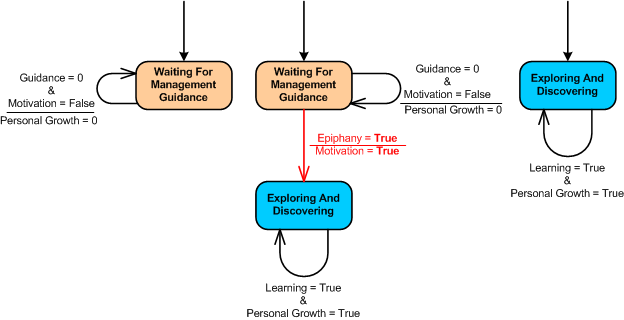
Ideally, one never wastes any time in the spirit-sucking “Waiting For Management Guidance” state. The “Exploring And Discovering” state, which is a natural gift to all human beings, would be transitioned to right out of the box. When we are born, we actually do enter this state right out of the box – so to speak. As soon as we start going to school, the institutional indoctrination starts and before we can say WTF?, we’re well on our way to the “Waiting For Management Guidance” state.
Makin’ Stuff Up
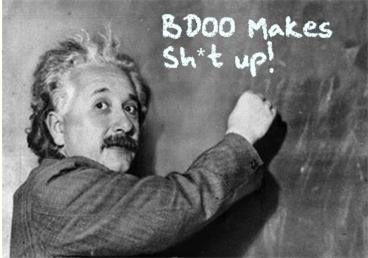
As I’ve said many times before: “I like to make stuff up“.
Two radically different ways of labeling people (I know, I know – you’re above passing judgment on people) who make stuff up are: liar and artist. After all, makin’ stuff up means that the “stuff” is new in some way. In the case of a liar, the spoken or written words assert that something exists when it doesn’t, or an event happened when it didn’t, or vice versa. The same idea holds for the case of an artist, except there are more choices of media for expression.
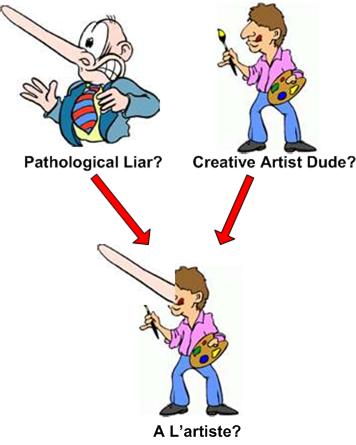
Now that you know what I am, what are you?
Golf Outfit
For the past 15 or so years, I’ve been going on a yearly golf trip with a group of good friends. This year’s “golf camp 2010” starts next Saturday, 4/10/10. In preparation for the upcoming debacle, I e-mailed the group a picture of the top third of my planned opening day outfit:
 I asked who wanted to be in my foursome and I received these two answers:
- “You look pretty”
- “I would, but I heard that you had three others already.”
I’m having trouble deciding which shorts to wear. I was thinking “Hot Dog”, but “Disco Balls” seems to better match my hair style. What do you think?

Fieldstones
Since I started blogging over a year ago and I enjoy the intense feeling of liberation it brings forth, I’ve been trying to get better at it. The most helpful book that I’ve read to help me in this personal goal seeking behavior is Jerry Weinberg‘s “Weinberg On Writing – The Fieldstone Method“. Jerry is a well known software consultant who’s spent many years in the trenches and has written over 40 technical books that transcend the disciplines of software and systems engineering.
Jerry’s method is based upon the idea of being diligently aware of, and recording “fieldstones” of personal interest as they serendipitously appear in your consciousness by the grace of god (little “g” on purpose). Since I’ve read that an average of 50,000 thoughts per second (approximately 1 thought every freakin’ 2 seconds!) appear in an individual’s head every day, I figure that 1 or 2 of my thoughts must be helpful in some way to me or others. Thus, I try to, as Jerry recommends, keep paper and pen within striking distance so that I can pull these fieldstones out of the ether and usher them into the physical world. Periodically, I peruse these mostly BS notes and build a fieldstone wall in the form of a blog post that I cast into the wind with the help of wordpress.com.
Here is some of Jerry’s sage, and maybe unconventional, writing advice that resonates with me. Maybe some of it will resonate with you.
Never attempt to write (about) something you don’t care about.
One way for smart people to be happy is to express themselves.
Most of the work is gathering the fieldstones.
The key to effective writing is the human emotional response to the fieldstone. Always be guided by the emotional response (in you).
The secret isn’t in the fieldstone, it’s the response to the stone.
Steal all the words you can. If you steal from one source, it’s plagiarism. If you steal from many, it’s research.
Overabstraction is the number 1 enemy of meaning and understanding.
If you care less about the material after you finish than before you started, then junk it.
Quality is personal.
Gather, then organize.
So what do you think? Ready to start expressing yourself?

Temporary Guilt Trip
After reflecting on the content of many of my recent blog posts, I’ve come to the conclusion that I’m on a temporary (all things are temporary) guilt trip. I can’t put my finger on any one specific event or situation that ignited this trip, but I’m experiencing the feeling frequently. I think the reason may be because most of my writings are diatribes against powerful institutional norms that never seem to get questioned. Oh well, “this too shall pass“.

Flippin’ The Bozo Bit
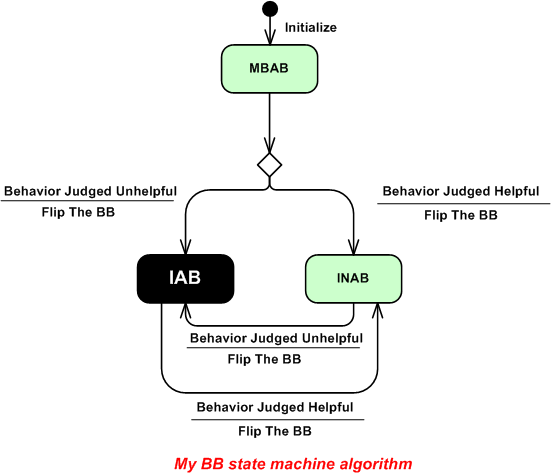
I first encountered the concept of the “Bozo bit” (BB) while reading a software engineering book penned by Jim McCarthy many years ago. The BB is a tri-state, enumerated attribute that can be used by immature people like BD00, but not you, to judge people. The BB’s 3 mutually exclusive states are defined as:
- Is-Not-A-Bozo (INAB)
- May-Be-A-Bozo (MBAB)
- Is-A-Bozo (IAB)
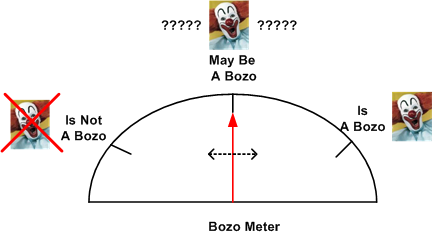
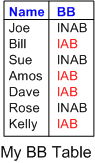
When working with new colleagues and managers in the workplace, I always initialize the BB to the MBAB state. Over time, after observing a candidate’s behavior and interacting with him/her, I consciously decide to flip the BB to either the IAB or INAB state. In my experience, way more managers fit the criterion for the BB=IAB state than peers.
As the state machine below shows, I’m flexible in that my initial judgment may change. However, once the BB transitions into the IAB state, I rarely decide to subsequently flip it into the INAB state; but I’m delighted when it does miraculously happen.
How about you? Do you use the BB to judge people? Of course not. Being an infallible person of high integrity and impeccable moral character (like the “former” Tiger Woods, Eliot Spitzer, Bill Clinton, Gary Hart, Mark Hurd, Ken Lay, the executive team at HSBC Bank, General Patreus, yada-yada-yada), you don’t employ such childish tactics. Right?
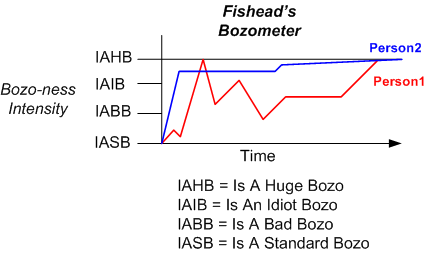
 Fishead’s Bozometer
Academic Authors
I read quite a few books penned by science authors. Those that I can actually understand are very informative and entertaining. Every single one of the books always has one or more great stories regarding historical confrontations between different warring factions over who’s theory and experimental data are more “truthful“. If you believe what’s written, some of those confrontations were really nasty.
Isn’t it ironic that people who are deemed so intelligent often resort to (so-called) childish tactics in order to discredit others and prove themselves right? Nah, because underneath the veneer of revered intelligence they’re just regular freakin’ people like you and me. They’re human beings with feelings, egos, and the instinct to survive and prosper no matter what the cost. Gasp!
Science books written for laymen always seem to include words like “prestigious”, “world reknowned”, “Nobel laureate”, and “respected” in order to influence the readers beliefs via appeals to authority. The more compliments that I read, the more cautious I become in evaluating the subject matter. Being the closet non-conformist that I am, I tend to cast those words aside and gravitate toward those arguments and logic that appeal to my inner soul in the form of resonant feelings. How un-scientific of whacky me.
Anyone who conducts an argument by appealing to authority is not using his intelligence; he is just using his memory. – Leonardo daVinci
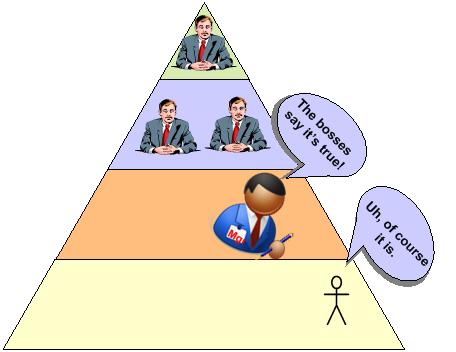
In case you haven’t noticed, I’m a total hypocrite. I appeal to authority all the time in feeble attempts to promote my views. I do it by inserting quotes from respected people into a lot of my blog posts, uh, like this one. Of course, I’m not using my intelligence. I’m using google.
Data-Meaning-Information
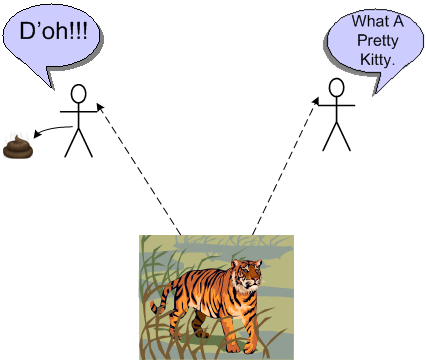
When raw data acquires meaning to someone or some group, it becomes actionable information. Otherwise, it’s just noise.
While reading Melanie Mitchell’s “Complexity: A Guided Tour”, one of the tantalizing questions raised by the author is: “how does raw data acquire meaning?“. I think that’s a cool question and I think the author’s answer is cool too: “data acquires meaning when, after processing, it is perceived by the observer to be connected with the observer’s survival or well being“. Ergo, because all perception is subjective, one man’s meaningless data is another man’s meaningful information. More interestingly, one man’s meaningful information is another man’s different meaningful information.
Why?
“Why are you behaving this way”? I’ve been asked that question quite frequently – mostly by a person higher up in a chain of authority with an approved title. My stock answer has always been something to the effect: “to expose errors, ambiguity, and mistakes so that they can be corrected and the whole can grow, develop, and temporarily arrest the growth in entropy that eventually destroys all closed systems“. Even though that response has often stunned the questioner into a frozen silence, it’s never been enough to counter the pre-conceived opinion they have formed: “I’m a bad person who doesn’t care about the feelings of others“. Bummer.
Most of the time, I’m fully prepared for the external “asshole judgment” and it bounces right off of me. At other times, and thank god (little “g” in “god” on purpose) it doesn’t happen that often, it pierces my heart and triggers a massive case of angst and discomfort. It sux to be human, no?
How about U? Do U ever get asked asked about your deviant behavior from the norm by those that are charged with judging U because of the inherent design of CCH bureaucracies? If not, why not? Is it because U are a saint who gets along with all souls? Is it because you suppress your individuality in order to conform to what is expected of good little children? What’s your story?


Why am I here?
WTF?
Meh!
D'oh!

My BTC Address



 Bulldozer00's Blog