Archive
Four Possible Paths, Eight Possible Outcomes
The graphic below transforms the title of this post into a visual manifestation that can be discussed “rationally” (<— LOL!).
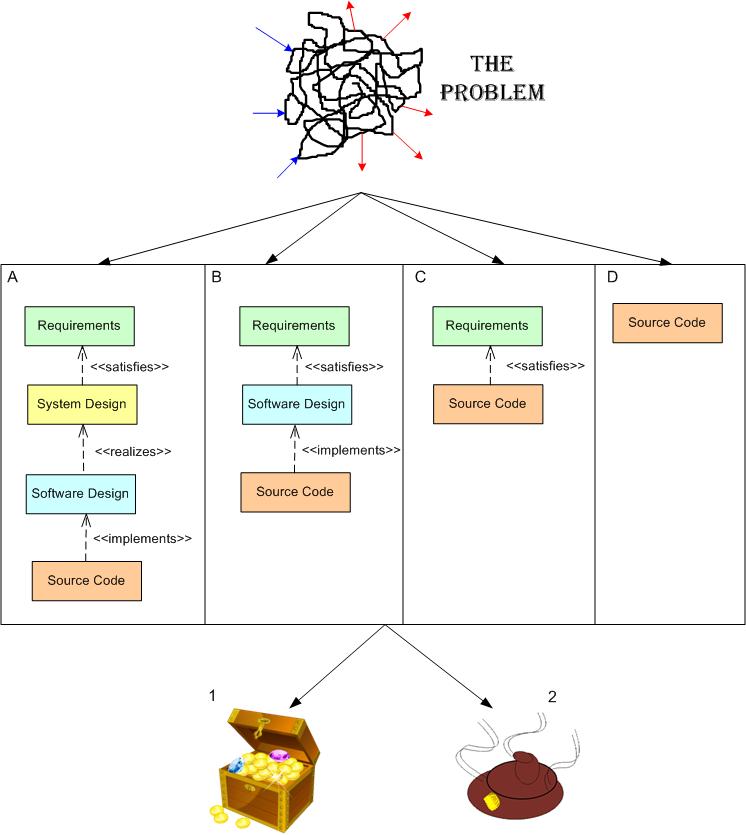
The graphic shows that pursuing any of the four path selections can lead to a “number 2” outcome. It’s just a matter of how much time and money are exhausted before the steaming pile is discovered. D’oh! I hate when that happens.
Obviously, the path to the holy grail is D->1. Simply take whatever info is known about the problem, code up the solution, get paid tons o’ munny, move on to the next problem to be solved, and never look back. Whoo Hoo! I love when that happens.
Preventers, Not Managers
The worst companies directly contribute to the physical and emotional deterioration of their DICforces by unceasingly imposing ridiculous schedules and ratcheting up the (unspoken) pressure to work massive amounts of unpaid overtime for long stretches of time. Average companies do the same under the tired old mantra of “it’s a hostile business environment“, but they take good care of their DICsters after much damage is done. The best of the breed are highly self-aware systems that actively practice “crisis prevention” – not “crisis management“. They diligently monitor the “system’s” vital signs and know when things are getting too toxic for their people. Unlike the worst and the average, the best actually take effective action to relieve the stress on their people before the wreckage accumulates. They’ll sacrifice some almighty dollars by relaxing schedules, or giving some extra days off, or frequently providing small tokens of appreciation to counter the toxicity of the operational environment. They are preventers, not managers.

Wouldn’t it be kool if the role of “manager” was jettisoned in favor of “preventer“? If anything, it would at least drive home what those in charge of others should really be doing – preventing, not managing.
The Yearning For Autonomy
Since they generally increase operating costs, trigger “it’s not my job” myopia, and encourage us-vs-them friction, I’m not a fan of unions. Nevertheless, I found this article on TechCrunch.com amusingly interesting: “Want To Unionize Developers? Focus On Workplace Democracy”. This passage caught my eye and triggered a chuckle:
Developers want autonomy. They don’t want to be jerked around by stupid managers who impose unrealistic deadlines, make impossible promises to clients and just generally disrespect their employees. Historically developers have had two options for dealing with bad management: find a better job or found a startup. But worker self-management would offer a third options — give the developers control over their own work.
Alas, those managers that are stupid don’t know they’re stupid and those employees who are disrespected don’t know they’re disrespected. Between: 1) these two BD00 made-up facts; 2) management’s fear of loss of control and stature; 3) the declining reputation of unionization over the years – don’t expect the idea of software developer unions to take hold soon; if ever.

A Glimpse Into C++11PL4
At Microsoft’s Build 2012 conference, ISO C++ chairman Herb Sutter introduced the new isocpp.org web site. On the site, you can download a draft version of Chapter 2 from Bjarne Stroustrup‘s upcoming “The C++ Programming Language, 4th Edition“. As I read the chapter and took “the tour“, I noted the new C++11 features that Bjarne used in his graceful narrative. Here they are:
auto, intializer lists, range-for loops, constexpr, enum class, nullptr, static_assert.
Since I’m a big Stroustrup and C++ fan, I just wanted to pass along this tidbit of info to the C++ programmers that happen to stumble upon this blog.
A Real Renaissance
For quite some time now, I’ve been hearing that C++ has been undergoing a resurgence of interest; a renaissance. However, until recently, I couldn’t tell if the claim was real, or just some hype coming out of the C++ community to fruitlessly combat the rise of a plethora of new languages.
Well, I’m convinced that the renaissance is legit. The slides below, pilfered from Herb Sutter‘s “The Future Of C++” talk at Microsoft Build 2012, introduced the formation of a new C++ trade group, the “Standard C++ Foundation“.

Note that there are some big guns with deep pockets backing the foundation along with a cadre of brilliant and dedicated directors at the helm.
It’s a good time to be a C++ programmer, so join the renaissance and start learning the new features and libraries offered up in C++11. Of course, if your technical management is not forward looking and it’s tight with training dollars, you’ll have to do it on your own time, covertly, behind the scenes. But it will not only be fun, it will enhance your marketability.
One Hit, One Miss
In “So Far from Home: Lost and Found in Our Brave New World“, Margaret J. Wheatley hits the mark with BD00:
The interactive nature of the Net distinguishes it from all earlier technologies; from the start, it was based on public interactions, not on private use such as with books or recordings. It fed on two powerful human needs— to be visible and to connect— at a time when we were already feeling lonely and invisible. Our insatiable appetites for self-creation and self-expression have transformed us into twenty-first-century hunter-gatherers. We’ve become addicted to what else we might find, where the next click might lead us, so we incessantly keep hunting.
Meg also misses the mark with:
…we’ve abandoned the thinking skills we humans developed over many centuries of evolution: abstract thinking, nuanced language, envisioning, moral reasoning, the scientific method.
Note that the hit and miss only apply to BD00; according to BD00. How do they apply to you; according to you?

King Of The Hill
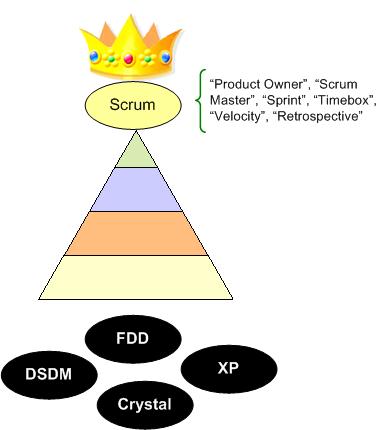
Scrum is an agile approach to software development, but it’s not the only agile approach. However, because of its runaway success of adoption compared to other agile approaches (e.g. XP, DSDM, Crystal, FDD), a lot of the pro and con material I read online seems to assume that Agile IS Scrum.
This nitpicking aside, until recently, I wondered why Scrum catapulted to the top of the agile heap over the other worthy agile candidates. Somewhere online, someone answered the question with something like:
“Scrum is king of the hill right now because it’s closer to being a management process than a geeky, code-centric set of practices. Thus, since enlightened executives can pseudo-understand it, they’re more likely to approve of its use over traditional prescriptive processes that only provide an illusion of control and a false sense of security.”
I think that whoever said that is correct. Why do you think Scrum is currently the king of the hill?
Related articles
- The Scrum Sprint Planning Meeting (bulldozer00.com)
- Scrum And Non-Scrum Interfaces (bulldozer00.com)
The C++ Product Roadmap
Fresh from the ISO C++ chairman himself, Herb Sutter, I present you with the C++ product roadmap:

If all goes according to plan, a minor release of the ISO standard will be hatched in 2014. By minor, Herb means that it will be mostly bug fixes to C++11, plus a filesystem library based on Boost.org‘s brilliant work. The networking library, which is big and being developed by a large group of smart people, will be hatched incrementally in a series of Technical Specifications (TS).
The main point that Herb stressed when he hoisted the slide was that “the past is not a good predictor of the future“. If all goes according to plan, the time between major releases of the standard will have been cut from 13 years to 6.
Ignored, Denied, Or Pushed Aside
Fresh from Margaret Wheatley‘s “So Far from Home: Lost and Found in Our Brave New World“, I present you with these four vexing questions:
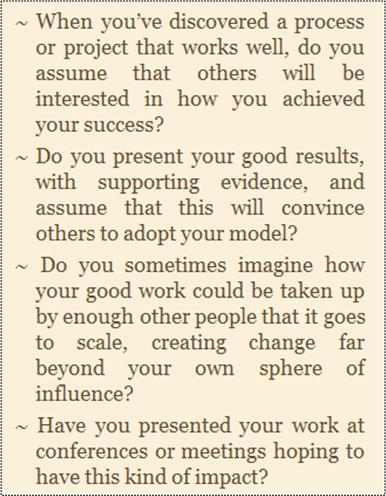
If you answered “yes” to any of these questions and your expectations were met, then you’re incredibly lucky because:
They’re based on an assumption of rational human behavior— that leaders are interested in what works— and that has not proven true. Time and again, innovators and their highly successful projects are ignored, denied or pushed aside, even in the best of times. In this dark era, this is even more true. – Margaret Wheatley
Not that I’m an innovator, but these questions hit me hard because it took decades of disappointment and bewilderment for me to realize that Ms. Wheatley is right. But you know what? Once I became truly aware that “it is the way it is“, I felt liberated. Now I do the work for the work itself. An intimate, joyful communication between the creator and the created.
Quantum Chaotic Complexity
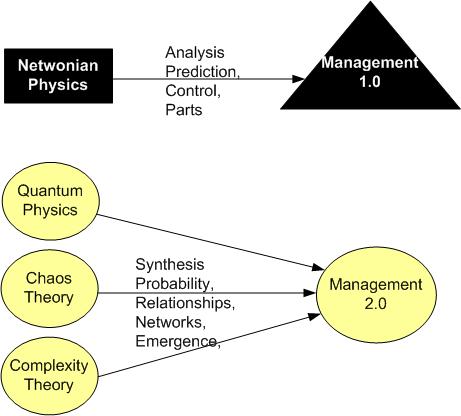
How many institutions are still being managed in accordance with the knowledge learned from 17th century physics? These days, its networks and relationships, not billiard balls and force.

Why am I here?
WTF?
Meh!
D'oh!

My BTC Address



 Bulldozer00's Blog