Flouting Convention
As software-centric systems get more complex, one of the most effective tools for preventing the creation of monstrous BBoMs downstream is “layering”. The figure below shows a generic model of the layering concept.

When you use layering, you partition your system into a vertical stack with the most “exciting” application-specific functions and objects at the top of the stack and the more mundane and boring functionality down in the basement. In a pure layered system, the higher layers depend on the services provided by the lower levels and there are no dependencies the other way. The cleaner and crisper your inter-layer boundaries, the lower your maintenance cost and frustration.
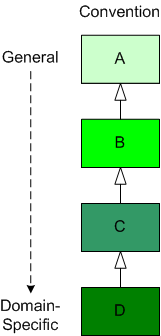
The figure below shows the conventional approach of representing an inheritance hierarchy in an object oriented design. What’s wrong with this picture? Relative to the layered model, it’s “upside down“. The most general class is on top and the most domain-specific class is at the bottom. WTF and D’oh!
Since “layering” has been around much longer than object-orientation, Bulldozer00 thinks that a layered, object-oriented software system should always be presented to stakeholders like this:
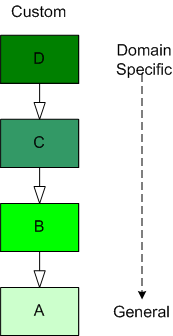
This method of representation aligns cleanly with the layered “view” of the system and is thus, less confusing and dis-orienting to all audiences, dontcha think? To hell with convention, – at least in this situation.
Leave a reply to PNeumiller Cancel reply

Why am I here?
WTF?
Meh!
D'oh!

My BTC Address



 Bulldozer00's Blog
Everything above TCP/IP is in the Bozone layer so its a don’t care for me…
Above, or below? 🙂