Archive
The Loop Of Woe
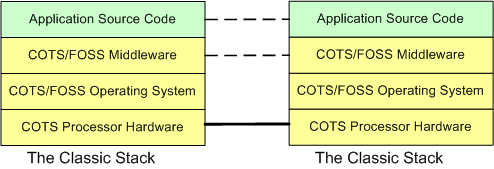
When a “side view” of a distributed software architecture is communicated, it’s sometimes presented with a specific instantiation of something like this four layer drawing; where COTS = Commercial Off The Shelf and FOSS=Free Open Source Software:
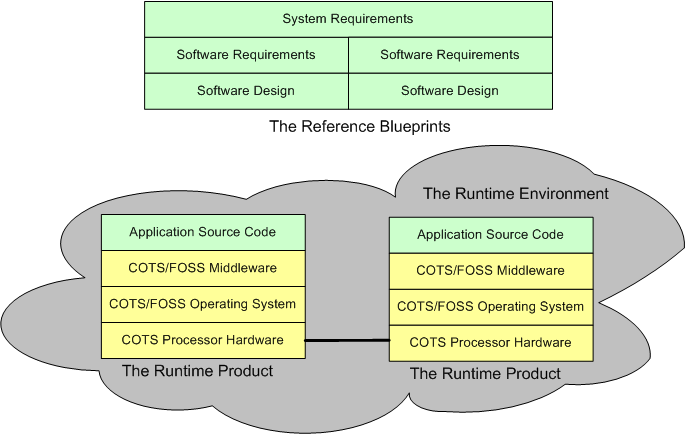
I think that neglecting the artifacts that capture the thinking and rationale in the more abstract higher layers of the stack is a recipe for high downstream maintenance costs, competitive disadvantage, and all around stakeholder damage. For “big” systems, trying to find/fix bugs, or determining where new feature source code must be inserted among 100s of thousands of lines of code, is a huge cost sink when a coherent full stack of artifacts is not available to steer the hunt. The artifacts don’t have to be high ceremony, heavyweight boat anchors, they just have to be useful. Simple, but not simplistic.
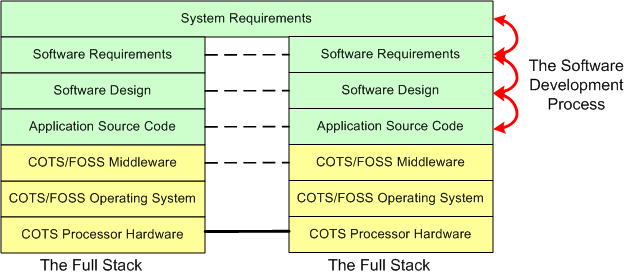
For safety-critical systems, besides being a boon to maintenance, another increasingly important reason for treating the upper layers with respect is certification. All certification agencies require an auditable and scrutably connected path from requirements down through the source code. The classic end run around the certification obstacle when the content of the upper layers is non-existent or resembles swiss cheese is to get the system classified as “advisory”.
 Frenetic , clock-watching managers and illiterate software developers are the obvious culprits of upper layer neglect but, ironically, the biggest contributors to undependable and uncertifiable systems are customers themselves. By consistently selecting the lowest bidder during acquisition, customers unconsciously encourage corner-cutting and apathy towards safety.
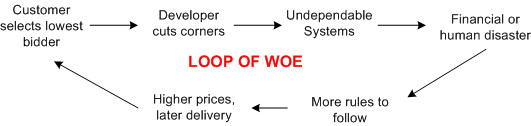
Got any ideas for breaking the loop of woe? I wish I did, but I don’t.

Why am I here?
WTF?
Meh!
D'oh!

My BTC Address



 Bulldozer00's Blog