We Promise To Change, And We Really Mean It This Time
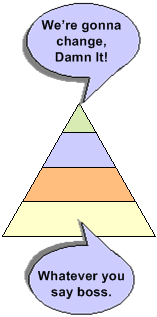
GM is a classic example of a toxic Command and Control Hierarchical (CCH) corpocracy. In this NY Times article, the newly anointed hierarchs and their spin doctors promise that “things will be different” in the future. Uh, OK. If you say so.
According to corpo insiders, here’s the way things were.
…employees were evaluated according to a “performance measurement process” that could fill a three-ring binder.
“We measured ourselves ten ways from Sunday,” he said. “But as soon as everything is important, nothing is important.”
Decisions were made, if at all, at a glacial pace, bogged down by endless committees, reports and reviews that astonished members of President Obama’s auto task force.
“Have we made some missteps? Yes,” said Susan Docherty, who last month was promoted to head of United States sales. “Are we going to slip back to our old ways? No.”
G.M.’s top executives prized consensus over debate, and rarely questioned its elaborate planning processes. A former G.M. executive and consultant, Rob Kleinbaum, said the culture emphasized past glories and current market share, rather than focusing on the future.
“Those values were driven from the top on down,” said Mr. Kleinbaum. “And anybody inside who protested that attitude was buried.”
In the old G.M., any changes to a product program would be reviewed by as many as 70 executives, often taking two months for a decision to wind its way through regional forums, then to a global committee, and finally to the all-powerful automotive products board.
“In the past, we might not have had the guts to bring it up,” said Mr. Reuss. “No one wanted to do anything wrong, or admit we needed to do a better job.”
In the past, G.M. rarely held back a product to add the extra touches that would improve its chances in a fiercely competitive market.
“If everybody is afraid to do anything, do we have a chance of winning?” Mr. Stephens said in one session last month.
The vice president would say, ‘I got here because I’m a better engineer than you, and now I’m going to tell you how bad a job you did.’ ”
The Aztek was half-car, half-van, and universally branded as one of the ugliest vehicles to ever hit the market. … but his job required him to defend it as if it were a thing of beauty.
Here’s what they’re doing to change their culture of fear, malaise, apathy, and mediocrity:
G.M.’s new chairman, Edward Whitacre Jr., and directors have prodded G.M. to cut layers of bureaucracy, slash its executive ranks by a third, and give broad, new responsibilities to a cadre of younger managers.
Replacing a binder full of job expectations with a one-page set of goals is just one sign of the fresh start, said Mr. Woychowski.
Mr. Lauckner came up with a new schedule that funneled all product decisions to weekly meetings of an executive committee run by Mr. Henderson and Thomas Stephens, the company’s vice chairman for product development.
Mr. Stephens has been leading meetings with staff members called “pride builders.” The goal, he said, was to increase the “emotional commitment” to building better cars and encourage people to speak their minds.
“But now we need to be open and transparent and trust each other, and be honest about our strengths and weaknesses.”
So, what do you think? Do you think that these “creative” CCH dissolving solutions and others like them will do the trick? Do you think they’ll pull it off? Is it time to invest in the “new” GM’s stock?

Why am I here?
WTF?
Meh!
D'oh!

My BTC Address



 Bulldozer00's Blog