Archive
Ain’t Life A Kitsch?
BD00 is proud to present the following post from his third guest blogger: twitter friend Serial Mom. When she submitted her story for “approval“, S&M gave the BD00 editorial staff free license to “bulldozify” her ditty as necessary. W00t!

So, let’s start off with some important definitions:
Kitsch – something of tawdry design, appearance, or content created to appeal to popular or undiscriminating taste (Random House Kernerman Webster’s College Dictionary)
Korpo Kitsch – the employee-facing happy side of corporate greed and bozoness; usually something of tawdry design, appearance, or content – Serial Mom
Now that that’s done, let’s hear Serial Mom’s story; which is still unfolding as we speak. As you’ll soon realize, S&M’s story is simply one real example of korpo kitschenism playing out in many office buildings near you. Here we go…..
At T=1, the C-suites of two online services companies decide the way to go forward is to embrace the wildly successful “too big to fail” strategy and merge into one big korpo hairball. (WTF? AS IF anyone would care about bailing out an online services borg).

At T=2, the more bureaucratic of the two borgs wins the political battles (we just luv our mid-20th century HR!) and the reorg is kicked off. Whoo Hoo!
At T=3, some politically motivated technical decisions are made (using the process of decision-based evidence-making) within the newly merged star chamber .
At T=4, on the IT side of things, an OK working agile shop meets the South Asian waterfall shop.
At T=5, to appease the shareholders, millions of $$ are promised by way of synergy via 2 years of mind-numbing IT migration projects.
At T=6, the potentates in the head shed start wondering why the company is losing customers and innovation momentum – even though it’s obvious they “allocated” 90% of the workforce to work on those mind-numbing, “overhead“, IT migration projects.
At T=7, the C-suite junta wonders why there are loads of (schedule, cost, quality) problems downstream from their (infallible) technical decisions.
At T=8, the proclamation is made: SOMETHING NEEDS TO BE DONE!
At T=9, a superstar “fixer” gains membership to the exclusive C-suite in return for undertaking the dirty work of cleaning up the mess his peers have hatched.
At T=10, the standard MBA text book move is executed: people get laid off. Of course, the unintended consequences of the move manifest themselves soon after: good people leave and whatever is left of any positive corporate culture disappears. Poof!
At T=11, the “agile transformation” mandate is foisted down upon the people (and this includes squeezing the currently agile parts of the company into the new, cargo-cult, agile model).
At T=12, middle managers, who know the transformation won’t work but fear for their (so-called) careers, don’t push back and they each dutifully assume their messenger role.
At T=13, the prelude to the korpo kitsch moment arrives. Everybody in IT is “required” by management (at the behest of the brilliant HR team, of course) to take a standardized test that will “scientifically” determine the training needs for the upcoming agile transformation. The test will consist of a personality section (Myers-Briggs style) and some standard IQ verbal, numerical, and logical crap. (Since they’re by definition they’re infallible, BD00 & S&M bet that the managers don’t have to walk the talk and eat their own dog food).

At T=14, the actual corpo kitsch moment arrives. Whoo Hoo! It is announced that the test results will (supposedly) only be shared between HR, the line manager, and the test taker. They are supposed to provide meaningful, self-awareness.
Actually, T=14 hasn’t arrived yet. Hopefully, S&M will provide a follow up guest post, starting at T=15, where she begins describing her and her colleagues’ newly found meaning and quantum increase in self-awareness. We’ll also hopefully get an update on how the “agile transformation” is coming along.

Note1: BD00.com welcomes guest bloggers. The editorial office is open 24 X7. Like the Korpo Kitsch dude above, we’re here to help you.
Note2: This just in. Serial Mom has promised a sequel guest post at a date to be determined later.
Size, Flexibility, Learning

So, do ya think that the losses in flexibility and capacity for learning are forgone conclusions as an org increases in size (i.e. adds more managers, directors, executives)? If not, got any examples that demolish the theory?
One of the great tragedies of life is the murder of a beautiful theory by a gang of brutal facts. – Benjamin Franklin
Any Obstacles?
In Scrum, one of the three questions every team member is supposed to answer at the daily standup meeting is: “Are there any obstacles in your way?“. BD00 often wonders how many people actually answer it, let alone really answer it…

And no, BD00 doesn’t really answer it. Been there and done that. As you might surmise, because of his uncivilized nature and lack of political savvy, it didn’t work out so well – so he stopped using that industry-best practice. But for you and your team, really answering the question works wonders – right?
The day soldiers stop bringing you their problems is the day you have stopped leading them. They have either lost confidence that you can help or concluded that you don’t care. Either case is a failure of leadership.” – Karl Popper
A Bureaucrat’s Dream
Thanks to powerful, vested interests and ignorant leadership, some stodgy dinosaur orgs still cling to a bevy of high-falutin’, delay-inducing, product conception/development/maintenance processes. Because of the strong nuclear forces in place, it’s virtually impossible to change these labyrinthian processes – despite those noble “continuous improvement” initiatives that are seemingly promoted 24X7.
The state transition diagram below models a hypothetical schedule and budget busting maintenance process. But beware! Since BD00 likes to make sh*t up, the 5 role, 12 step, bureaucrat’s dream is a totally contorted fabrication that has no semblance to the truth.

Of course, some classes of discovered product defects should indeed be run through the ringer so that they don’t happen again. But mindlessly requiring every single defect (e.g. a low risk, one-line code change?, formatting violation?, documentation typo?) to plod through the glorious process is akin to using brain surgery to cure a headache.
Many of these process worshipping orgs can save a ton of time, money, and frustration if they “allowed” a parallel JFTDT process for those simple, low risk, defects discovered during and after a product is developed.

But no! In zombie orgs that have these types of beloved processes in place, it can’t be done. Despite the unsubstantiated and outrageous BD00 claim that the vast majority of discovered defects in most projects can be safely run through the insanely simple JFTDT process, anyone who’s not the CEO that thinks of advocating for a parallel, streamlined process should think twice. No one wants to be the next dude who gets shoved through the hidden JSTFU process.
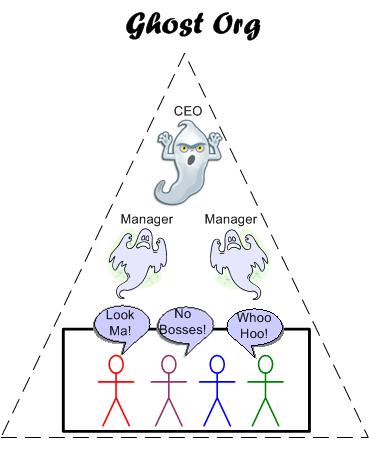
Ghost Org
After discovering Valve Inc. earlier this year, I wrote several posts (here and here and here) praising their flat organizational structure and unique management practices. Well, as the saying goes, “nothing ever is as it seems“.
In February, Valve laid off a group of hardware designers and one of them has spoken out against the company. Jeri Ellsworth, the former head of Valve’s hardware division, is that person:

In a podcast interview, Jeri said the following unflattering things about the company:
There is actually a hidden layer of powerful management structure in the company, and it felt a lot like High School. There are popular kids that have acquired power, then there’s the trouble makers, and then everyone in between. Everyone in between is ok, but the trouble makers are the ones trying to make a difference.
Now we’ve all seen the Valve handbook, which offers a very idealized view. A lot of that is true. It is a pseudo-flat structure, where in small groups at least in small groups you are all peers and make decisions together.
Their structure probably works really well with about 20 people, but breaks down terribly when you get to a company of 300 people. Communication was a problem. I don’t think it works.
They have a bonus structure in there where you can get bonuses – if you work on very prestigious projects – that are more than what you earn. So everyone is trying to work on projects that are really visible. And it’s impossible to pull those people away for something risky like augmented reality because they only want to work on the sure thing. So that was a frustration, we were starved for resources. And I probably was [abrasive] but I just couldn’t find a way to make a process to actually deliver any hardware inside that company.
If I sound bitter, it’s because I am. I am really, really bitter. They promised me the world and then stabbed me in the back.
Despite my naivete and gullibility, I originally thought that Valve was an exemplar case. With over 300 employees, they seemingly proved that flatness and egalitarianism can scale. It seemed magical. But sigh, according to Jeri, who admittedly is only one data point, it doesn’t.
In light of this sad, new information, I no longer think flatness scales. At a certain (but unknown) size, hierarchy is required for sustained economic viability in for-profit enterprises. When you arrive at the (unknown) size where you need a hierarchy, tis better to have a visible, transparent pyramid than a hidden, privileged one.
The trouble with unwritten rules is that you don’t know where to go to erase them. – Unknown
I’m glad to be part of an org with a visible hierarchy instead of an invisible one. At least I know who to suck up to (which I do well) and who not to piss off (which I don’t do well).
Hierarchy will never go away, never. – Tom Peters
Slack Time
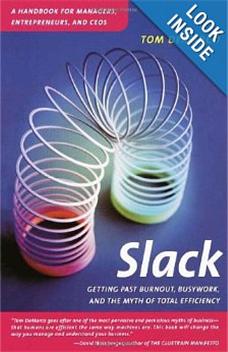
The best resource on the importance of “slack time” is Tom DeMarco‘s aptly titled book, “Slack: Getting Past Burnout, Busywork, and the Myth of Total Efficiency“. (I’ve loved everything Mr. DeMarco has produced since the 80’s.)
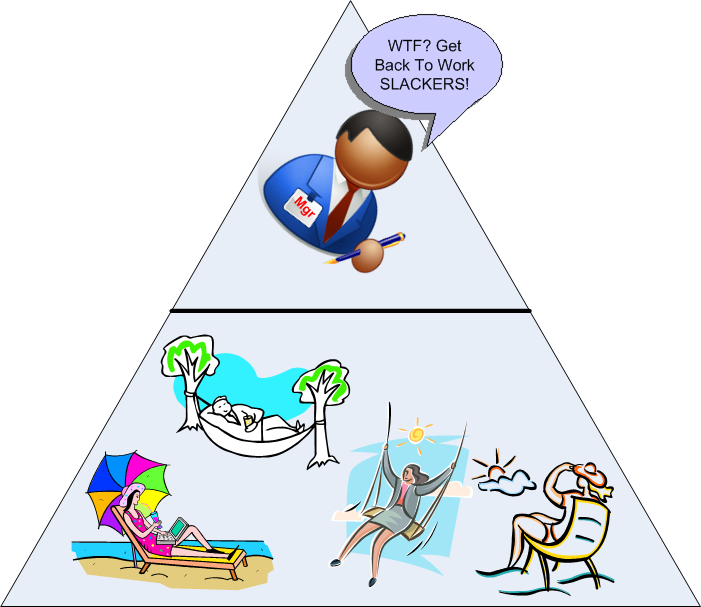
I’ve worked on projects where I had a lot of slack time available that allowed me to interlace learning with doing. I’ve also worked on projects where I was balls-to-the-wall; solely “doing” for the entire duration. While on the former, I felt grateful to be able to kill two birds with one stone. While on the latter, I felt angry at having no time for personal development.
Having too much slack time available on a project is certainly inefficient. It can lead to boredom and a guilty feeling of “not contributing” to the org. On the other hand, having no time to breathe can lead to unnecessary mistakes, corner-cutting, and an angry feeling of being exploited – especially if you perceive other teams as having too much slack time available.
Schmuckers?
Ooh, ooh. Look at the picture that I snapped whilst on vacation. Expectedly, the sign “protected” the first parking spot next to the restaurant entrance. I’d speculate that it’s a great place to work, wouldn’t you?

By Default
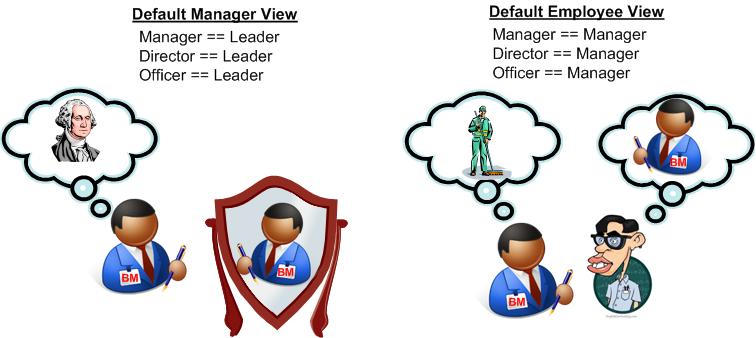
Much has been written about the differences between, and similarities across, management and leadership. But unsurprisingly, most managers equate the word “manager” with the word “leader” by default. After all, they’ve been appointed by other “leaders“. Thus, by (their) definition, managers are leaders.
On the other hand, most raw employees equate the word “manager” with “manager” by default. Err, on second thought, since (as usual) he has no supporting “data“, this BD00 post is prolly full of BS00:
Our old arrogant, egotistical nature (continuously) seeks out sustaining agreement with itself and its distorted opinions. – William Samuel
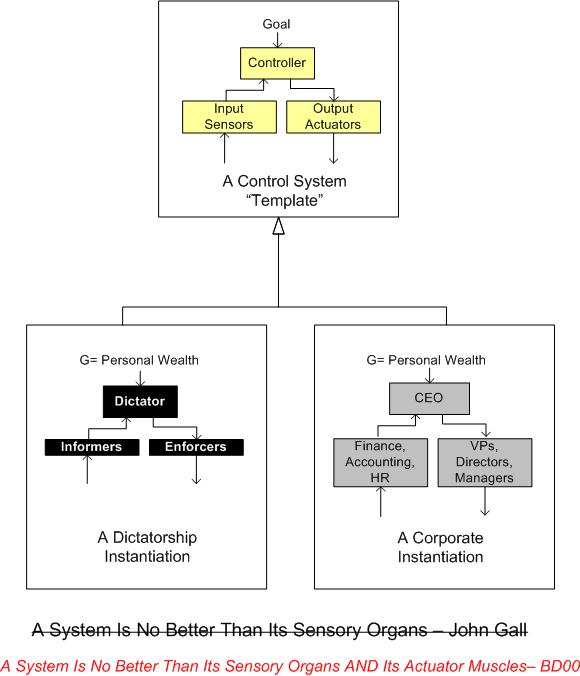
Sensors AND Actuators
Spoken But Unwritten
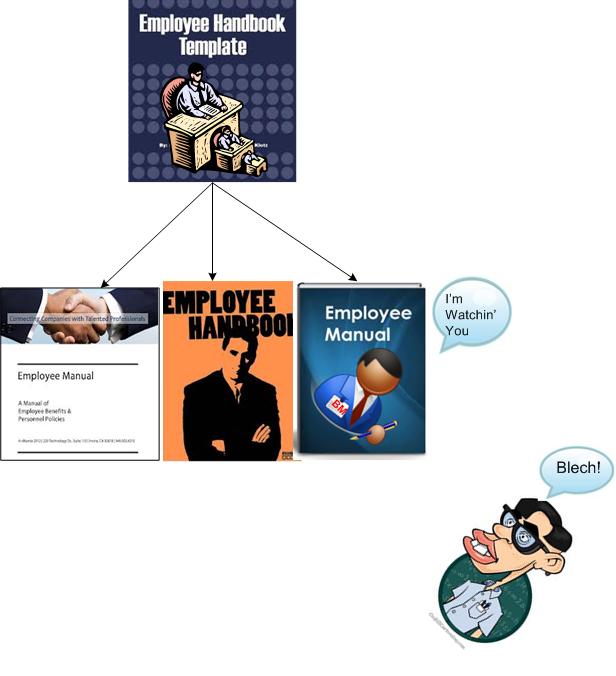
Because they may be called to account for their hypocritical behavior, you may find people in authority saying things like these, but you most likely won’t find them written into the Employee Handbook:
“Providing the freedom to fail is an important trait of the company— we couldn’t expect so much of individuals if we also penalized people for errors. Even expensive mistakes, or ones which result in a very public failure, are genuinely looked at as opportunities to learn. We can always repair the mistake or make up for it.”
“But problems show up when hierarchy or codified divisions of labor either haven’t been created by the group’s members or when those structures persist for long periods of time. We believe those structures inevitably begin to serve their own needs rather than those of Valve’s customers. The hierarchy will begin to reinforce its own structure by hiring people who fit its shape, adding people to fill subordinate support roles. Its members are also incented to engage in rent-seeking behaviors that take advantage of the power structure rather than focusing on simply delivering value to customers.”
“…for the most part working overtime for extended periods indicates a fundamental failure in planning or communication. If this happens at Valve, it’s a sign that something needs to be reevaluated and corrected. If you’re looking around wondering why people aren’t in “crunch mode,” the answer’s pretty simple. The thing we work hardest at is hiring good people, so we want them to stick around and have a good balance between work and family and the rest of the important stuff in life.”
“Our profitability per employee is higher than that of Google or Amazon or Microsoft, and we believe strongly that the right thing to do in that case is to put a maximum amount of money back into each employee’s pocket. Valve does not win if you’re paid less than the value you create. Over time, compensation gets adjusted to fit an employee’s internal peer-driven valuation.

Why am I here?
WTF?
Meh!
D'oh!

My BTC Address



 Bulldozer00's Blog