CCP
Relax right wing meanies, it’s not CCCP. It’s CCP, and it stands for Context, Content, and Process. Context is a clear but not necessarily immutable definition of what’s in and what’s out of the problem space. Content is the intentionally designed static structure and dynamic behavior of the socio-technical solution(s) to be applied in an attempt to solve the problem. Process is the set of development activities, tasks, and toolboxes that will be used to pre-test (simulate or emulate), construct, integrate, post-test, and carefully introduce the solution into the problem space. Like the other well-known trio, schedule-cost-quality, the three CCP elements are intimately coupled and inseparable. Myopically focusing on the optimization of one element and refusing to pay homage to the others degrades the performance of the whole.
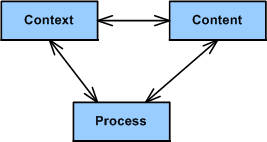
I first discovered the holy trinity of CCP many years ago by probing, sensing, and interpreting the systems work of John Warfield via my friend, William Livingston. I’ve been applying the CCP strategy for years to technical problems that I’ve been tasked to solve.
You can start using the CCP problem solving process by diving into any of the three pillars of guidance. It’s not a neat, sequential, step-by-step process like those documented in your corpo standards database (that nobody follows but lots of experts are constantly wasting money/time to “improve”). It’s a messy, iterative, jagged, mistake discovering and correcting intellectual endeavor.
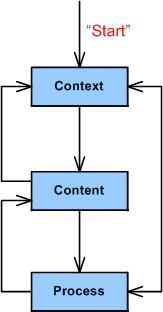
I usually start using CCP by spending a fair amount of time struggling to define the context; bounding, iterating and sketching fuzzy lines around what I think is in and what is out of scope. Next, I dive into the content sub-process; using the context info to conjure up solution candidates and simulate them in my head at the speed of thought. The first details of the process that should be employed to bring the solution out of my head and into the material world usually trickle out naturally from the info generated during the content definition sub-process. Herky-jerky, iterative jumping between CCH sub-processes, mental simulation, looping, recursion, and sketching are key activities that I perform during the execution of CCP.
What’s your take on CCP? Do you think it’s generic enough to cover a large swath of socio-technical problem categories/classes? What general problem solving process(es) do you use?

Why am I here?
WTF?
Meh!
D'oh!

My BTC Address



 Bulldozer00's Blog